


 English
 中文
中文


When I talk with customers about a 120 Extruder, I do not start with a long list of numbers. I first want to understand what they are actually producing, which plastic material they use, what output they expect, and how the machine will fit into the existing Production Line. A good Plastic Extruder is not simply a machine that melts plastic. It needs to feed material steadily, melt it evenly, control temperature accurately, form the product continuously, and keep the Production Process stable for long working hours.
At Wuxi Shuochuan Electromechanical Equipment Manufacturing Co., Ltd., we develop and manufacture extrusion equipment for industrial production. Our product range covers high-speed extruders, three-in-one BV extrusion automatic production lines, three-in-one plus one BVVB automatic production lines, photovoltaic wire and Cable Production lines, automotive Wire Production lines, electronic Wire Production Lines, network communication wire production lines, charging pile Cable Production Lines, and related take-up, unwinding and Auxiliary Equipment.
The 120 Extruder is designed as part of this broader extrusion system. Depending on the customer's material, product size, output target, screw configuration and production layout, I can work with the customer to define the proper machine configuration instead of forcing every project into one fixed specification.
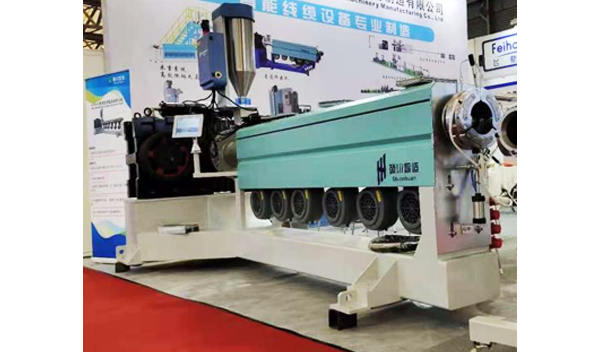
1. What Is a 120 Extruder?
A 120 Extruder is a continuous Plastic Extrusion Machine used to heat, soften, mix, and push thermoplastic material through a die so that it can be formed into a continuous product. In practical production, the extruder is one of the most important pieces of equipment in the extrusion line because the stability of feeding, melting and pressure directly affects the quality of the final product.
The name “120 Extruder” identifies the machine model or size used by the manufacturer. The actual working specification should always be confirmed from the final technical proposal because the required screw design, motor configuration, heating system, cooling arrangement and production capacity can change with the application.
This point is important when buying an Industrial Plastic Extruder. Two machines with the same model name may not be suitable for exactly the same application if their screw geometry, compression ratio, material system, temperature control, die arrangement or downstream equipment is different. For this reason, I prefer to select an extruder around the production process rather than selecting a machine from a model name alone.
In wire and cable manufacturing, for example, the extruder may be used to apply PVC, PE, XLPE or other thermoplastic insulation or sheath materials around a conductor. In other applications, the same basic extrusion principle can be adapted for plastic pipes, profiles, films, sheets, coating materials and other continuous plastic products.
A properly configured 120 plastic extruder can therefore become more than an individual machine. It can serve as the main extrusion unit inside a complete production line, working together with pay-off equipment, preheating systems, dies, cooling devices, measuring systems, capstans, take-up units and control systems.
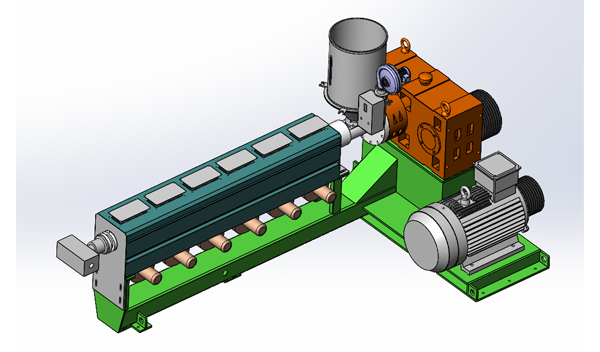
2. How Our 120 Extruder Works
The working principle is easier to understand than it may first appear. I normally describe the extrusion process as a controlled journey: material enters, heat and mechanical force soften it, the screw moves it forward, the die gives it shape, and the downstream equipment cools and finishes the product.
Step 1: Material Feeding
Plastic pellets or other suitable thermoplastic feedstock enter the hopper. Stable feeding is important because an unstable material supply can lead to changes in melt pressure, product size and surface quality. Depending on the material and production requirements, the feeding arrangement may include a hopper, automatic loader, drying equipment or other auxiliary components.
Step 2: Plastic Melting and Mixing
The screw rotates inside the heated barrel. As the material moves forward, it receives heat from the barrel and mechanical energy generated by the screw. The material gradually changes from solid pellets into a continuous plastic melt.
This is one of the areas where screw design matters. Different thermoplastics behave differently when heated and sheared. A screw that works well for one material may not be the right choice for another. That is why I prefer to confirm the raw material before finalizing the screw and process configuration.
Step 3: Pressure Building
Once the material is melted, the screw continues to push it toward the front of the barrel. The pressure needs to remain sufficiently stable for the die to receive a consistent flow of melt. Excessive fluctuation can affect dimensions, appearance and production stability.
Step 4: Die Forming
The molten plastic passes through a die. The die determines the basic shape of the extruded product. For cable extrusion, the die system is designed around the conductor and insulation or sheath dimensions. For pipes and profiles, the die geometry is designed around the required cross-section.
Step 5: Cooling and Sizing
After leaving the die, the hot product must be cooled and stabilized. Depending on the application, cooling may involve water, air or a combination of systems. The downstream cooling process is not simply about making the product cold. It also helps the product keep the required shape and dimensions.
Step 6: Take-Up and Final Production
After cooling, the product moves through the downstream equipment and is collected by a take-up unit or sent to the next production stage. For wire and cable production, synchronized line speed is particularly important because the extruder and take-up system need to work together rather than operating as two unrelated machines.
3. Main Features of Our 120 Extruder
When we build an Industrial Extruder, I pay attention to practical production problems rather than only the appearance of the machine. The equipment needs to be understandable for operators, stable during long production runs, convenient to maintain, and suitable for integration with the customer's complete line.
Stable continuous extrusion: The machine is designed for continuous thermoplastic processing, helping maintain a steady material flow during normal production.
Controlled heating: Multiple heating zones can be configured according to the process requirements so operators can manage the temperature along the barrel.
Application-based screw design: Screw configuration can be selected according to the plastic material, product type and production requirements.
Integrated control: The extrusion system can be integrated with electrical controls and downstream equipment to support coordinated production.
Flexible line integration: The extruder can be used as part of wire and cable extrusion lines and other continuous plastic processing systems.
Operator-friendly operation: We focus on making important operating information easier to monitor, including temperature, running status and other process conditions.
Maintenance access: Practical maintenance considerations are included during equipment design so routine inspection and servicing can be handled more efficiently.
Customized configuration: The final machine configuration is confirmed according to material, product specification, output target, factory conditions and other project requirements.
I also want to make one thing clear: “high efficiency” does not mean simply increasing motor speed. If the screw, heating system, die, cooling system and take-up equipment are not properly matched, higher speed can create more problems rather than more output. In real production, efficiency comes from the entire system working together.
4. Technical Advantages: What I Check Before Building the Machine
For an industrial 120 Extruder machine, the technical discussion normally starts before manufacturing begins. I need to know what the machine is expected to do. This avoids a common purchasing mistake: choosing a machine only by nominal size and discovering later that the screw, die or downstream equipment does not match the actual process.
| Item | What We Confirm | Why It Matters |
|---|---|---|
| Material | PVC, PE, XLPE or other thermoplastic material | Material behavior affects screw, heating and processing settings. |
| Product | Wire, cable, pipe, profile or other continuous product | The die and downstream system depend on the product structure. |
| Output | Required production capacity and operating speed | Helps match the extrusion unit with the actual production target. |
| Control | Temperature, speed, line coordination and electrical requirements | Stable control helps operators keep production conditions consistent. |
| Factory Conditions | Available space, power supply, cooling water and line layout | The machine must physically and electrically fit the production site. |
Source: The engineering approach above is aligned with the general machinery risk-assessment and risk-reduction principles described in ISO 12100:2010, which remains a current published edition according to ISO. The standard provides a methodology for identifying hazards, evaluating risks and reducing them during machinery design.
Electrical design is another area I take seriously. The electrical equipment of machinery has to be considered as part of the complete machine rather than as an afterthought. IEC 60204-1 covers electrical, electronic and programmable electronic equipment and systems for machines and includes requirements related to protective measures, control circuits, emergency stop functions and technical documentation.
| Control Area | Production Goal | Typical Result When Properly Matched |
|---|---|---|
| Feeding | Stable material supply | More consistent extrusion conditions |
| Barrel Heating | Controlled melting | More stable melt condition |
| Screw Rotation | Controlled conveying and mixing | Stable material movement and output |
| Die System | Consistent product forming | Better dimensional control |
| Cooling | Product stabilization | Improved shape retention |
| Take-Up | Matched line speed | Smoother continuous production |
Source: This table is an engineering process summary based on the extrusion workflow described for the supplied product application information. Safety-related electrical design references IEC 60204-1:2016 and its later consolidated amendment information published by IEC.
5. Where Can a 120 Extruder Be Used?
The answer depends mainly on the material and the final product. In our business, we focus strongly on wire and cable extrusion, but the basic extrusion process is also used across many plastic processing applications.
Wire and Cable Manufacturing
This is one of the most important applications for our extrusion equipment. A plastic extruder can be used to apply insulation or protective layers around conductors. The complete line may include a pay-off, preheating section, extrusion unit, die, cooling system, diaMeter control, capstan and take-up equipment.
We supply equipment solutions for photovoltaic wires and cables, automotive wires, electronic wires, network communication cables and charging pile cables. Each application can have different requirements for material, product diameter, production speed and line arrangement.
Photovoltaic Cable Production
Photovoltaic cable production requires stable insulation and sheath extrusion because the finished cable needs consistent dimensions and reliable protection. Our extrusion systems can be integrated into photovoltaic wire and cable production lines according to the required product structure and process.
Automotive Wire Production
Automotive wire production often involves long continuous runs and tight control of product dimensions. The extrusion system needs to work smoothly with the conductor pay-off, cooling equipment and take-up unit. Line coordination becomes especially important when production speed is high.
Electronic and Communication Wire
Electronic wires and network communication cables can require precise insulation structures and stable production conditions. The extruder, die, cooling and take-up system need to be selected as one production system instead of as isolated machines.
Plastic Pipe and Profile Extrusion
Thermoplastic extrusion is also widely used for continuous products such as pipes and profiles. In these applications, the die, sizing system, cooling system and haul-off equipment are particularly important because the product must keep its shape after leaving the die.
Other Plastic Processing Applications
Depending on the material and process, extrusion technology can also be adapted to other plastic products and continuous coating applications. Before recommending the 120 Extruder for a new application, I would first review the material, product drawing, output requirement and process conditions.
6. How We Manufacture and Test the 120 Extruder
Manufacturing an extruder is not just a matter of assembling a motor, barrel and screw. The machine needs to be treated as a complete production system. At Wuxi Shuochuan, our work covers R&D, manufacturing and sales, so we can keep the communication between engineering, production and customer service relatively direct.
Engineering Confirmation
Before production, we confirm the customer's material, product specifications, expected output, equipment configuration, factory conditions and delivery schedule. If the project is part of a complete cable production line, we also need to understand the relationship between the extruder and the other line equipment.
Component and Mechanical Preparation
The required mechanical and electrical components are prepared according to the approved configuration. Important components need to match the intended working conditions. The screw and barrel arrangement, heating system, motor drive and control system are considered together.
Assembly
Mechanical assembly is completed according to the approved design. Alignment, connection, wiring and component installation all affect later operation. Small mistakes at this stage can become large headaches during commissioning, so we prefer to deal with them before the equipment reaches the customer.
Electrical and Control Testing
The control cabinet, electrical circuits, sensors and operating functions are checked before shipment. We pay particular attention to whether the machine responds correctly to operating commands and whether the different sections of the production system can communicate as intended.
Complete Machine Testing
Before shipment, the complete machine or production line is assembled, tested and inspected according to the agreed requirements. Where the project conditions allow, we verify operating functions before dismantling or packing the equipment.
Our quality approach follows a process-based mindset. ISO describes ISO 9001 as a quality management framework intended to help organizations consistently provide products and services that meet customer and applicable requirements while supporting continual improvement.
The company has stated that it has obtained more than ten utility model patent certificates and has passed ISO 19001 quality management system certification. For the exact certificate edition, certification scope and certificate validity, customers can request the corresponding documentation from our sales team before placing an order.
```7. Delivery, Inspection and International Shipping
```Buying a 120 Extruder is only half of the project. Getting the machine safely to the factory and making sure the customer knows what will arrive in the shipment is equally important.
Our normal delivery process begins with technical confirmation. We agree on the machine configuration, required accessories, electrical requirements, documentation and shipping arrangement before production. Production then follows the confirmed technical requirements.
| Stage | Main Activity | Customer Confirmation |
|---|---|---|
| 1. Technical Discussion | Material, product, output and configuration review | Process and specification confirmation |
| 2. Production | Mechanical, electrical and control system manufacturing | Progress and configuration updates when required |
| 3. Assembly | Complete machine or line assembly | Configuration and function review |
| 4. Testing | Operation and control inspection | Testing against agreed requirements |
| 5. Packing | Moisture protection, cushioning and structural protection | Shipping package confirmation |
| 6. Shipment | Sea, air or land transportation | Destination and delivery schedule |
Source: This delivery table is based on the company's supplied product delivery procedure and standard industrial equipment shipping practice. It is not a fixed international shipping standard because the exact packing and transport method depends on equipment size, destination, carrier requirements and contract terms.
For export orders, we normally use moisture-resistant materials, protective cushioning and strong wooden cases or pallets when appropriate. The goal is simple: reduce the risk of damage caused by loading, handling, storage and long-distance transportation.
Standard delivery generally includes the plastic extruder, necessary components, electrical controls, technical documents, accessories and other items specified in the contract. Payment terms are also confirmed in the contract, commonly involving a deposit before production and the balance before shipment.
Because equipment dimensions and shipping conditions vary, I do not recommend giving customers a generic delivery time before checking the project. The production cycle can depend on the extruder configuration, screw arrangement, customization level, production capacity, order quantity and current manufacturing schedule.
```8. Why Choose Shuochuan for a 120 Extruder?
```There are many extrusion machine manufacturers in the market. From my perspective, the real difference is not simply whether a supplier can manufacture an extruder. The more important question is whether the supplier understands the production line around the extruder.
This is where our experience in wire and cable extrusion equipment becomes useful. We are not only supplying an isolated plastic extrusion machine. Our product range includes complete extrusion production lines and related take-up, unwinding and auxiliary equipment. That gives us a wider view of how the machine needs to operate in an actual factory.
R&D and Manufacturing in One Company
Wuxi Shuochuan integrates R&D, manufacturing and sales. This structure allows technical questions to move between the customer and engineering team without too many unnecessary steps.
Practical Customization
I do not believe customization should mean changing everything just for the sake of being different. Good customization means changing the parts that actually affect production: screw configuration, die arrangement, control functions, downstream equipment and line layout.
Experience with Wire and Cable Applications
Our equipment portfolio covers photovoltaic wire, automotive wire, electronic wire, communication cable and charging pile cable production. These applications help us understand the importance of line synchronization, stable extrusion and reliable take-up operation.
Quality and Process Control
The company has obtained utility model patents and operates with a quality management approach. ISO explains that quality management systems provide a structured framework for controlling processes, monitoring performance, improving operations and meeting customer requirements.
Service That Starts Before the Order
For an industrial machine, service should not begin after the equipment arrives. It starts when we ask the first technical question. If the material, output target or product drawing is unclear, it is better to solve that problem before production than after installation.
Our company spirit is “Quality First, Continuous Improvement, and Honest Service.” Our long-term goal is to create reliable products and make sure customers are satisfied with the equipment they receive. For us, that means being clear about what the machine can do, what needs to be customized and which parameters still need to be confirmed.
120 Extruder FAQ
What materials can the 120 Extruder process?
The machine is intended for thermoplastic processing, but the exact material range depends on the screw configuration, temperature requirements and final product. Common applications in our product portfolio include PVC, PE and other thermoplastic materials used for wire and cable production. We confirm the material before finalizing the configuration.
Can the 120 Extruder be used for cable production?
Yes. Our extrusion equipment is used in wire and cable production applications, including photovoltaic cables, automotive wires, electronic wires, network communication cables and charging pile cables. The exact configuration depends on the cable structure, insulation or sheath material, conductor size and production target.
Is the 120 Extruder suitable for photovoltaic wire production?
It can be configured as part of a photovoltaic wire and cable extrusion line. However, I would confirm the cable specification, insulation material, line speed, conductor size, cooling requirements and take-up arrangement before recommending the final configuration.
Can the extruder be customized?
Yes. Industrial extrusion projects often require customization. We can discuss screw configuration, electrical controls, die arrangements, downstream equipment, line layout and other requirements according to the customer's production process.
What information should I provide before requesting a quotation?
The most useful information includes the material name, product type, product drawing or size, target output, expected production speed, power supply, available factory space and required auxiliary equipment. If you are replacing an existing machine, photographs and the current machine specifications can also help us understand the application.
How long does production take?
There is no single delivery time for every 120 Extruder order. Production depends on the machine configuration, screw system, customization requirements, order quantity and current manufacturing schedule. We confirm the expected delivery schedule before production.
How is the machine tested before shipment?
Before shipment, the complete machine or production line is assembled, tested and inspected according to the agreed requirements. Electrical controls, machine operation and the relevant configuration are checked before packing.
How is the 120 Extruder packed for export?
For export orders, we normally consider moisture protection, cushioning and mechanical protection. Strong wooden cases or pallets may be used depending on the equipment size, transportation method and destination.
What is included in the standard delivery?
Standard delivery generally includes the plastic extruder, necessary components, electrical controls, technical documents, accessories and other items specified in the confirmed order. The exact packing list should always be based on the signed technical and commercial documents.
Can you supply a complete extrusion production line?
Yes. In addition to individual high-speed extruders, we manufacture complete extrusion equipment and production lines for several wire and cable applications. Depending on the project, the system may include pay-off and unwinding equipment, extrusion units, cooling equipment, take-up systems and other auxiliary equipment.
How do I choose the right 120 Extruder configuration?
I recommend starting with the product rather than the machine. Tell us what material you use, what you are producing, the product size, expected output and production speed. We can then work backward to the appropriate extrusion and downstream configuration. This approach usually produces a much more useful quotation than simply asking for the price of a “120 Extruder.”
```Final Thoughts: A 120 Extruder Should Be Chosen Around the Production Process
```A 120 Extruder is an important part of a modern plastic extrusion system, but the machine itself is only one part of the production process. Feeding, melting, screw conveying, pressure control, die forming, cooling and take-up all need to work together. When one section is poorly matched, the whole line can suffer.
That is why we take a project-based approach at Wuxi Shuochuan. Before manufacturing, we discuss the material, product specification, output, factory conditions, equipment configuration and delivery requirements. During manufacturing, we focus on assembly, electrical control and machine testing. Before shipment, we inspect the agreed configuration and prepare the equipment for transportation.
If you are looking for a 120 Extruder manufacturer for wire and cable extrusion, photovoltaic cable production, automotive wire production, electronic wire production or other thermoplastic extrusion applications, send us your product specification and production requirements. I would rather spend a little more time understanding the process at the beginning than recommend a machine that looks good on paper but does not fit the factory.
That is the practical way we approach extrusion equipment: Quality First, Continuous Improvement, and Honest Service.
```



 WhatsApp
 телефон