


 English
 中文
中文


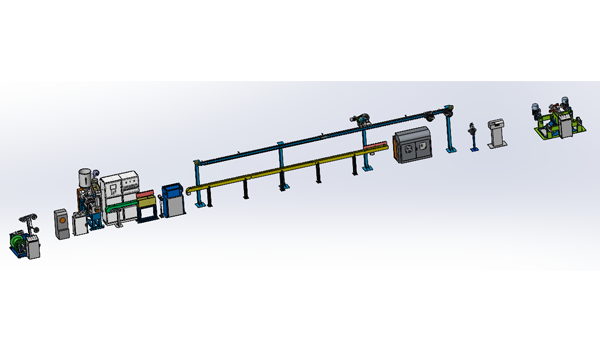
When I talk about a 50 Nylon Sheath Extrusion Production Line, I do not simply mean an extruder with a few supporting machines around it. For me, a complete nylon sheath extrusion line is a production system. Every part, from material feeding and extrusion to cooling, forming, take-up, and final inspection, needs to work together properly.
In wire and cable manufacturing, the outer sheath has a job that cannot be ignored. It protects the cable structure, improves mechanical resistance, and helps the finished cable meet the requirements of its intended application. Nylon is used in many cable applications because it can provide a useful combination of mechanical protection and practical processing performance when the material and process are selected correctly.
Our 50 Nylon Sheath Extrusion Production Line is designed around this type of continuous production requirement. At Wuxi Shuochuan Electromechanical Equipment Manufacturing Co., Ltd., I focus on building extrusion equipment that is stable, practical, easy to operate, and suitable for real factory conditions. We develop and manufacture extrusion-related equipment for wire and Cable Production, including photovoltaic wire, automotive wire, electronic wire, communication wire, charging pile cable, and other products.
I also know that every cable factory has slightly different requirements. Cable construction, nylon material, conductor size, production speed, cooling conditions, factory layout, and automation requirements can all affect the final line configuration. That is why I prefer to confirm the actual product and process before recommending a complete 50 nylon sheath extrusion line.
1. What Is a 50 Nylon Sheath Extrusion Production Line?
The name “50 Nylon Sheath Extrusion Production Line” generally identifies an extrusion line built around a 50-class extruder configuration. The exact meaning of the model designation should always be confirmed against the customer's required machine configuration and product process. I do not recommend judging an extrusion line only by the number in its model name.
The real value of the line comes from how the different sections cooperate. The extrusion unit needs to feed and melt the nylon material steadily. The extrusion die needs to form the sheath around the cable correctly. The cooling section needs to help stabilize the newly formed sheath. The traction and take-up sections then need to move and collect the finished cable in a controlled way.
A typical 50 Nylon Sheath Extrusion Production Line can therefore include several functional sections:
Material feeding and preparation system
50-class extrusion unit
Heating and temperature control system
Extrusion die and cable forming section
Cooling and sizing section
Traction or haul-off equipment
DiaMeter or process monitoring equipment where required
Take-up equipment
Electrical control system
Supporting Auxiliary Equipment
The exact equipment combination depends on the customer's cable structure and Production Process. For example, a line for a small electronic wire does not necessarily need the same configuration as a line for a larger industrial cable. This is one of the first things I check before discussing the equipment in detail.
| Production Section | Main Function | Why It Matters |
|---|---|---|
| Material Feeding | Provides extrusion material to the machine | Helps maintain continuous material supply |
| Extrusion Unit | Processes and pushes the nylon material | Controls the basic extrusion process |
| Die and Forming | Forms the sheath around the cable | Affects sheath shape and coverage |
| Cooling Section | Cools and stabilizes the extruded sheath | Helps maintain the finished cable structure |
| Traction | Moves the cable through the line | Supports continuous production |
| Take-Up | Collects finished cable | Makes handling and downstream processing easier |
| Control System | Coordinates machine operation | Improves operating consistency |
Source: Wuxi Shuochuan product and engineering information provided for this product page. Exact configuration varies according to customer requirements.
From my experience, this system-based approach is much more useful than simply asking, “What size is the extruder?” The extruder is important, but the complete line determines how smoothly the cable moves from raw material to finished product.
2. How Does the 50 Nylon Sheath Extrusion Line Work?
The basic idea behind nylon sheath extrusion is quite straightforward. Nylon material is supplied to the extrusion unit, processed under controlled conditions, and pushed through a die. At the same time, the cable or wire passes through the forming area. The molten material surrounds the cable and creates the required sheath layer.
After leaving the die, the newly formed sheath enters the cooling section. The cable is gradually cooled and stabilized before moving through the traction section. Finally, the finished cable is collected by the take-up system.
Although the principle sounds simple, stable production requires careful control. If material feeding changes too much, the extrusion process may become unstable. If the die is not matched properly with the cable structure, sheath thickness and surface quality can be affected. If traction and extrusion do not work together smoothly, the finished cable may not maintain the required dimensions.
Step 1: Material Preparation
The first step is making sure the selected nylon material is suitable for the intended cable application. Different nylon materials can have different processing characteristics. Moisture control can also be important for nylon processing, so material handling should follow the requirements of the selected material supplier.
Step 2: Controlled Feeding
The prepared material enters the extrusion unit. A stable feeding process gives the extruder a more consistent supply of material. This is especially important during continuous production because the cable may run for a long period without stopping.
Step 3: Plasticizing and Extrusion
Inside the extruder, the material is heated and plasticized. The screw transports the material forward while the extrusion system creates the pressure needed to push the processed material through the die.
This is the part where process knowledge becomes important. I do not recommend copying another factory's settings directly. Material grade, cable structure, line configuration, and production conditions can all change the appropriate process window.
Step 4: Sheath Forming
The extrusion die guides the nylon material around the cable. The die design and setup need to match the product structure. Proper centering is particularly important when the sheath must be distributed evenly around the cable.
Step 5: Cooling and Stabilization
After extrusion, the cable enters the cooling section. Cooling helps the sheath change from a soft extruded state into a stable finished layer. The actual cooling arrangement depends on the cable structure and line design.
Step 6: Traction and Take-Up
The traction unit pulls the cable through the production line at a controlled rate. The take-up unit then collects the finished cable. Good coordination between extrusion, traction, and take-up is essential for continuous production.
| Process Stage | Typical Process Concern | Operator Focus |
|---|---|---|
| Material Feeding | Stable material supply | Material condition and feeding consistency |
| Plasticizing | Stable material processing | Temperature and machine condition |
| Extrusion | Continuous material output | Process stability and pressure behavior |
| Sheath Forming | Correct cable coverage | Die alignment and product centering |
| Cooling | Shape stabilization | Cooling arrangement and cable movement |
| Traction | Stable cable movement | Line speed coordination |
| Take-Up | Neat cable collection | Winding condition and tension |
Source: Wuxi Shuochuan engineering guidance. Actual process parameters should be established according to the nylon material, cable construction, equipment configuration, and customer production requirements.
3. Main Features of Our 50 Nylon Sheath Extrusion Production Line
When designing a 50 Nylon Sheath Extrusion Production Line, I pay attention to more than extrusion itself. A production line has to be practical for the people who operate it every day.
Continuous Production Design
The line is designed for continuous wire and cable extrusion. This means the material processing, cable movement, cooling, traction, and take-up sections need to be considered as one production flow.
For a factory, continuous production can make the workflow easier to manage. Instead of treating every machine as a separate operation, operators can follow one connected process from material feeding to cable collection.
Controlled Material Processing
Nylon processing requires attention to material condition and process control. The extrusion unit is designed to provide controlled material processing and stable output. The exact settings should be confirmed according to the selected nylon material and cable application.
Practical Automation
We put practical automation into our equipment rather than adding automation simply for appearance. The goal is to make machine operation easier, improve repeatability, and reduce unnecessary manual intervention during normal production.
Flexible Configuration
A cable factory may produce several different types of products. For that reason, the 50 nylon sheath extrusion machine can be discussed as part of a broader line configuration rather than as an isolated machine.
Depending on the project, we can evaluate the required feeding arrangement, die system, cooling section, traction equipment, take-up system, control arrangement, and auxiliary equipment.
Designed for Real Factory Use
I always consider the factory environment when discussing equipment. Available floor space, cable routing, operator access, power requirements, material handling, downstream equipment, and maintenance access can all affect the final layout.
Integration With Other Cable Production Equipment
Our company also provides different extrusion production lines, take-up and unwinding series, auxiliary equipment, and cable-related production equipment. This makes it easier to consider the nylon sheath extrusion process as part of a complete manufacturing workflow.
4. Technical Advantages and What I Check Before Choosing the Equipment
One of the most common mistakes I see in equipment selection is choosing a machine only from a product name or a single technical parameter. A better approach is to start with the finished cable.
Before recommending a 50 Nylon Sheath Extrusion Production Line, I would normally want to understand several points.
Cable Structure
First, I need to know what is being covered. Is it a single wire, a multi-core cable, a special industrial cable, or another cable construction? The physical structure affects the die arrangement and the production process.
Nylon Material
The exact nylon grade matters. Different materials can behave differently during heating, plasticizing, extrusion, and cooling. The material supplier's processing recommendations should therefore be part of the equipment discussion.
Finished Product Size
The required cable diameter and sheath dimensions influence the die and line configuration. Product tolerance requirements should also be discussed before the machine is finalized.
Production Capacity
Capacity should not be considered separately from product size and material. A factory producing several different products may need a different setup from a factory producing one stable product continuously.
Factory Layout
The available production space is another practical issue. The extrusion unit, cooling system, traction equipment, Take-up Machine, control cabinet, and operator area all need reasonable positioning.
Operator Requirements
A technically capable machine can still be inconvenient if the operator cannot understand it easily. I therefore prefer a clear control arrangement and a practical operating process. Good equipment should help the operator, not make the operator fight with the machine.
| Selection Factor | Questions I Recommend Confirming | Impact on Line Configuration |
|---|---|---|
| Product | What wire or cable will be produced? | Determines the basic production process |
| Material | What nylon grade will be used? | Affects processing requirements |
| Product Size | What are the cable and sheath dimensions? | Influences die and forming configuration |
| Output Requirement | How much cable needs to be produced? | Influences production line planning |
| Automation | How much operator intervention is acceptable? | Influences control and auxiliary systems |
| Factory Space | What installation area is available? | Influences equipment layout |
| Future Products | Will several cable types be produced? | May influence configuration flexibility |
Source: Wuxi Shuochuan equipment selection guidance based on the product and company information supplied for this page.
These questions may look basic, but they save time later. I would rather spend time confirming the product at the beginning than discover a mismatch after the equipment has been manufactured.
5. Applications of the 50 Nylon Sheath Extrusion Production Line
The 50 Nylon Sheath Extrusion Production Line can be considered for a range of wire and cable manufacturing applications where a nylon protective layer is required. The exact application depends on the cable design, material, and required production process.
Automotive Wire
Automotive Wire Production often requires controlled and repeatable insulation or protective layer processing. A properly configured nylon extrusion line can be integrated into the production process for suitable automotive wire products.
Electronic Wire
Electronic wires can have relatively small product dimensions and may require stable forming. The extrusion line can be configured around the actual wire structure and material requirements.
Network Communication Cable
Communication cables have specific construction and dimensional requirements. When nylon is used as part of the cable structure, extrusion equipment needs to work with the rest of the cable manufacturing process.
Photovoltaic Wire and Cable
Photovoltaic cable production is another important area within our company's product range. Different cable materials and structures require different extrusion processes, so I always recommend confirming the exact cable specification before selecting equipment.
Charging Pile Cable
As charging infrastructure develops, charging cable production also requires reliable manufacturing equipment. A nylon sheath extrusion process may be used where the cable design calls for a suitable nylon layer.
Industrial Cable Products
Industrial cables can be designed for different working environments and mechanical conditions. The extrusion line can be adapted to the intended cable structure and production requirements.
| Industry / Product | Potential Extrusion Requirement | Important Consideration |
|---|---|---|
| Automotive Wire | Continuous protective layer extrusion | Wire structure and dimensional control |
| Electronic Wire | Controlled small-wire extrusion | Product size and surface quality |
| Communication Cable | Stable sheath or protective layer | Cable construction and material selection |
| Photovoltaic Cable | Continuous cable extrusion | Required cable material and structure |
| Charging Cable | Protective layer processing | Cable design and application requirements |
| Industrial Cable | Customized extrusion process | Working environment and product specifications |
Source: Wuxi Shuochuan product range and application information supplied for this product page. Actual suitability must be confirmed against the final cable design.
6. How We Manufacture, Test, Package, and Deliver the Extrusion Line
For me, manufacturing a 50 nylon sheath extrusion line starts well before the machine enters our workshop. The first step is communication. We confirm what the customer wants to produce, what material will be used, what production capacity is expected, what equipment configuration is required, and where the machine will be installed.
Requirement Confirmation
We first collect the product and process information. This may include cable structure, material, product size, production requirements, automation expectations, factory conditions, and delivery requirements.
Engineering and Configuration
After the requirements are confirmed, we determine the appropriate production line configuration. The aim is not to make the line more complicated than necessary. We focus on matching the equipment with the actual manufacturing process.
Component Manufacturing and Assembly
Our production process then moves into equipment manufacturing, component preparation, electrical integration, mechanical assembly, and line installation. The different sections need to be checked as they come together.
Complete Line Testing
Before shipment, the complete production line is assembled, tested, and inspected according to the agreed requirements. This is an important step because a complete line should be checked as a system rather than only checking individual components.
During testing, we pay attention to machine operation, control functions, component cooperation, and the overall production sequence. Any project-specific inspection requirements should be confirmed during the order process.
Documentation and Accessories
Standard delivery generally includes the complete extrusion production line, necessary components, technical documents, accessories, and other items specified in the order. The final packing list is based on the actual contract.
Export Packaging
Industrial equipment may travel a long way before reaching the customer's factory. We normally use moisture-resistant materials, protective cushioning, and strong export wooden cases or pallets to help protect equipment during loading, handling, storage, and transportation.
Transportation
Transportation can be arranged by sea, air, or land depending on the destination, equipment size, and delivery schedule. The production lead time normally depends on the extruder model, line configuration, customization requirements, and order quantity.
| Project Stage | Our Main Work | Customer Confirmation |
|---|---|---|
| Requirement Review | Understand product and process requirements | Product specifications and materials |
| Configuration | Develop suitable equipment arrangement | Line configuration and production requirements |
| Manufacturing | Produce and assemble equipment | Project progress where required |
| Testing | Assemble and test the complete line | Agreed requirements and inspection items |
| Packaging | Protect equipment for transportation | Packing and shipping information |
| Delivery | Arrange suitable transportation | Destination and delivery schedule |
Source: Wuxi Shuochuan manufacturing, testing, packaging, and delivery information supplied by the company.
7. Why Choose Wuxi Shuochuan for a 50 Nylon Sheath Extrusion Production Line?
Choosing an extrusion equipment manufacturer is not just about buying a machine. In my view, it is about finding a supplier that understands the production process and can communicate clearly when something needs to be changed.
Wuxi Shuochuan Electromechanical Equipment Manufacturing Co., Ltd. integrates research and development, manufacturing, and sales. The company has obtained more than ten utility model patent certificates, reflecting its ongoing work in equipment development and technical improvement.
The company also states that it has passed ISO 19001 quality management system certification. Certification details should always be checked against the current certificate and scope applicable to the specific project, but the company's approach is clear: production management and process control are treated as important parts of equipment manufacturing.
Experience Across Different Extrusion Applications
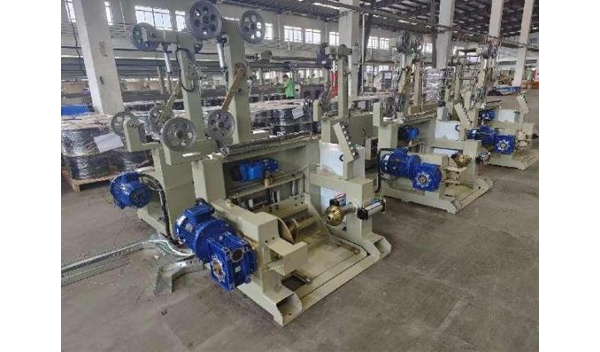
Our product range covers high-speed extruders, three-in-one BV extrusion automatic production lines, three-in-one plus one BVVB automated production lines, photovoltaic wire and Cable Production Lines, automotive Wire Production Lines, electronic wire production lines, network communication wire production lines, cable production lines, charging pile cable production lines, take-up and unwinding equipment, auxiliary equipment, and raw materials.
This broader product range helps us understand that an extrusion line rarely works alone. It normally forms one part of a larger cable manufacturing process.
Focus on Practical Equipment
Our company philosophy is “Quality First, Continuous Improvement, and Honest Service.” I see these words as more useful when they show up in the equipment itself: clear operation, sensible configuration, careful assembly, complete testing, and honest communication about what the machine can and cannot do.
Configuration Based on Customer Requirements
We do not assume that one configuration is suitable for every factory. Before production, we confirm product specifications, material requirements, production capacity, equipment configuration, and delivery schedule with the customer.
This approach is particularly useful when a customer is looking for a 50 Nylon Sheath Extrusion Equipment manufacturer rather than simply purchasing a standard machine from a catalog.
8. Frequently Asked Questions About the 50 Nylon Sheath Extrusion Production Line
What is a 50 Nylon Sheath Extrusion Production Line used for?
It is designed for continuous extrusion processes involving nylon sheathing or protective layers on suitable wires and cables. The exact application depends on the cable structure, nylon material, product dimensions, and production requirements.
Can the 50 nylon extrusion line be customized?
Yes. The final configuration can be discussed according to product specifications, material requirements, production capacity, automation needs, factory conditions, and other project requirements. Customization should be confirmed before production.
What products can be produced with this line?
Potential applications include suitable automotive wires, electronic wires, communication cables, photovoltaic cables, charging cables, and other wire and cable products requiring a nylon extrusion process. Final suitability depends on the actual cable design.
Does nylon require special material handling?
Nylon can be sensitive to moisture, so material handling and drying requirements should follow the recommendations for the specific nylon grade being used. I recommend confirming the material datasheet before finalizing the process conditions.
How do you determine the correct extrusion configuration?
We look at the cable structure, material, product size, production capacity, required automation, factory layout, and downstream process. These factors provide a much better basis for equipment selection than choosing a machine only by model name.
What is the production lead time?
Production lead time normally depends on the extruder model, complete line configuration, customization requirements, and order quantity. We confirm the expected delivery schedule with the customer before production begins.
How do you test the production line before shipment?
The complete production line is assembled, tested, and inspected according to the agreed requirements before shipment. The exact inspection items depend on the project configuration and customer requirements.
What is included in standard delivery?
Standard delivery generally includes the complete extrusion production line, necessary components, technical documents, accessories, and other items specified in the order. The final contents are confirmed by the contract and packing list.
What payment terms are available?
Payment terms are normally arranged according to the contract. They commonly include a deposit before production and the balance before shipment. The exact payment schedule should be confirmed in the individual order.
How is the equipment packaged for international transportation?
We normally use moisture-resistant materials, protective cushioning, and strong export wooden cases or pallets. The packing method is selected to help protect the equipment during loading, handling, storage, and long-distance transportation.
Can you arrange transportation?
Yes. Transportation can be arranged by sea, air, or land depending on the destination, equipment dimensions, and delivery schedule. Shipping details are confirmed according to the specific order.
What information should I provide when requesting a quotation?
I recommend providing the cable type, cable structure, nylon material or material grade, finished product size, production requirements, expected capacity, factory conditions, and any automation requirements you already have. If you have a product drawing or technical specification, that can make the discussion much easier.
Final Thoughts
A 50 Nylon Sheath Extrusion Production Line is not simply a machine for pushing plastic around a cable. It is a connected production system in which material preparation, extrusion, die forming, cooling, traction, take-up, and control all need to work together.
When I evaluate an extrusion project, I start with the finished product and work backward. What cable are we producing? What material is required? What sheath structure is needed? What production capacity is expected? How much automation does the factory need? What space is available? These questions usually tell us much more than a machine model number alone.
At Wuxi Shuochuan Electromechanical Equipment Manufacturing Co., Ltd., our focus is on developing and manufacturing practical automated equipment for wire and cable production. With our experience in extrusion equipment, cable production lines, take-up and unwinding systems, and related auxiliary equipment, we can discuss the 50 nylon sheath extrusion line as part of the customer's complete production process.
If you are comparing a 50 Nylon Sheath Extrusion Machine, 50 Nylon Sheath Extrusion Equipment, or a complete 50 Nylon Sheath Extrusion Production Line, I recommend starting with your actual product requirements rather than selecting equipment from a generic specification list. Once the cable structure, material, size, capacity, and factory conditions are clear, the right line configuration becomes much easier to determine.
Wuxi Shuochuan — Quality First, Continuous Improvement, and Honest Service.



 WhatsApp
 телефон