


 English
 中文
中文


When cables are stored in a busy factory or warehouse, the problem is usually not simply a lack of storage space. The bigger problem is how to keep long cables organized, easy to find, easy to move, and protected during daily handling. A pile of cables may look manageable at first, but once different cable types, sizes, orders, and production batches are mixed together, workers can spend a surprising amount of time looking for the right material.
That is where our 5-Meter Vertical Cable Storage Rack for Cable Management comes in. We designed this storage solution around a simple idea: use vertical space in a practical way while making cable storage easier to manage. The vertical structure can help manufacturers make better use of available warehouse height and keep cable materials arranged in a clearer way.
At Wuxi Shuochuan Electromechanical Equipment Manufacturing Co., Ltd., we work with industrial customers and understand that storage equipment is part of the production system. A storage rack should not only stand in a warehouse. It should fit the material flow, handling method, available space, and daily working habits of the customer.
Our company integrates R&D, manufacturing, and sales. We have obtained more than ten utility model patent certificates and have established quality management processes covering product development and manufacturing. Our working principle is straightforward: quality first, continuous improvement, and honest service.
The 5-Meter Vertical Cable Storage Rack can be considered for cable factories, electrical manufacturers, warehouses, workshops, logistics areas, maintenance facilities, and other industrial locations where long cable products or materials need organized storage.
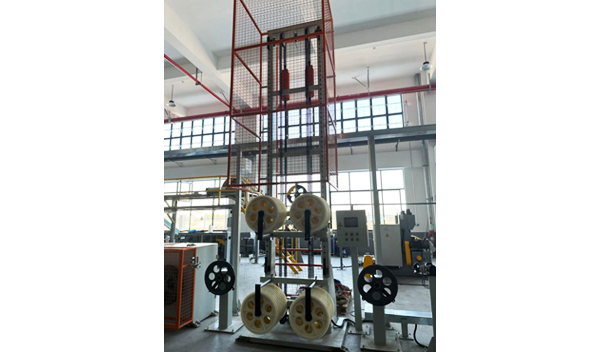
1. What Is a 5-Meter Vertical Cable Storage Rack?
A 5-meter vertical cable storage rack is a storage structure designed to organize cable materials in a vertical arrangement. Instead of placing every cable horizontally on the floor or piling different products together, the rack provides a defined storage area where cables can be positioned and managed according to the customer's working requirements.
The word “vertical” is important here. Many Industrial Warehouses have limited floor space but considerable usable height. If storage is planned only across the floor, valuable vertical space may remain unused. A vertical cable storage rack provides another way to organize materials without simply expanding the warehouse footprint.
For cable manufacturers, this can be especially useful because cable products are often long, flexible, and difficult to organize like ordinary boxes. Different cables may also have different production batches, specifications, colors, applications, or customer orders. A suitable cable storage rack helps separate these materials and makes daily handling more orderly.
The 5-meter design is intended for customers who specifically require a taller vertical storage structure. However, we do not treat “5 meters” as a universal installation instruction. The final structure should always be considered together with the actual warehouse height, floor conditions, material weight, handling equipment, access requirements, and local safety requirements.
In practical terms, our approach is simple. We first understand what the customer needs to store, how the materials are handled, how often they are accessed, and where the rack will be installed. We then discuss the suitable structure and configuration rather than forcing every customer into the same standard arrangement.
| Storage Planning Factor | Why It Matters | Our Practical Approach |
|---|---|---|
| Available height | Determines whether vertical storage is suitable | Check the installation environment before finalizing the structure |
| Cable type | Different cables may require different storage arrangements | Discuss cable size, shape, quantity, and handling method |
| Load requirement | The rack must suit the intended stored material | Confirm actual material weight before configuration |
| Access frequency | Frequently used materials need convenient access | Consider material flow and daily operating habits |
| Handling equipment | Forklifts and other equipment require safe working clearance | Plan access paths around the customer's handling method |
These points may sound basic, but they make a real difference. A storage rack that looks good on paper may not work well if workers cannot access the materials comfortably or if the storage layout conflicts with the warehouse's normal traffic.
2. How Does the Vertical Cable Storage System Work?
The working principle of our vertical cable storage rack is not complicated. The rack creates an organized physical structure for cable storage, while the warehouse operator determines how cables are placed, identified, accessed, and moved.
In a typical application, cables can first be grouped according to practical categories. For example, a cable manufacturer may separate materials according to product type, customer order, production batch, cable specification, or production stage. The exact classification depends on the company's own workflow.
After classification, the cables are placed into suitable storage positions. The vertical arrangement helps separate materials and can reduce random floor stacking. When a particular cable is required, the operator can identify its storage position and move it using the appropriate handling method.
This sounds simple because good storage should be simple to use. We do not believe warehouse equipment should make workers learn an unnecessarily complicated process.
For larger cable manufacturing facilities, the rack can become part of a wider material flow. Raw materials may move from incoming storage to production, finished cables may move from production to finished-product storage, and selected products may later move to packing and shipment.
When storage locations are planned clearly, the warehouse becomes easier to manage. Workers can spend less time moving unrelated materials out of the way, and managers can more easily understand where different cable products are located.
A Practical Storage Flow
Receive and identify cable materials.
Classify materials according to the customer's storage system.
Assign suitable storage positions.
Place cables using the agreed handling method.
Keep aisles and access areas clear.
Identify stored materials clearly.
Move materials to production or shipment when required.
Check the rack and storage area during routine operation.
OSHA's general industry requirements state that aisles and passageways should remain clear and in good repair where material-handling equipment is used. OSHA also states that stored material should not create a hazard and that tiered storage should be stable and secure against sliding or collapse. These principles are useful references when planning an industrial cable storage area.
For this reason, we always recommend looking at the complete storage area rather than considering the rack as an isolated product.
3. Main Features of Our 5-Meter Vertical Cable Storage Rack
Our 5-Meter Vertical Cable Storage Rack for Cable Management focuses on practical storage rather than complicated functions. The main advantage is the combination of vertical organization, flexible configuration, and industrial usability.
Vertical Space Utilization
The vertical arrangement allows customers to consider available building height when planning cable storage. This can be helpful in warehouses where floor space is limited but the building provides additional usable height.
Of course, the usable height of every building is different. We therefore recommend checking ceiling height, sprinkler systems, lighting, ventilation, overhead equipment, structural conditions, and local regulations before confirming the final rack height.
Organized Cable Storage
Cables can become difficult to manage when they are placed randomly on the floor. A structured storage system gives each group a clearer position. This is particularly helpful when a facility handles several types of cables at the same time.
Flexible Configuration
We can discuss rack size, storage arrangement, load requirements, and structure according to the customer's application. The purpose is not to make every rack identical. Different factories have different cable products and different warehouse layouts.
Practical Daily Operation
Industrial equipment needs to be useful on an ordinary Tuesday morning, not just impressive in a product photograph. Workers should be able to understand the storage arrangement and use it as part of their normal work.
Space-Saving Storage Concept
Vertical cable storage can help reduce unnecessary floor occupation when the site conditions are suitable. It can also make the warehouse layout easier to divide into storage, production, handling, and passage areas.
Suitable for Different Industrial Environments
The rack can be considered for cable manufacturing plants, electrical equipment factories, warehouses, workshops, logistics centers, maintenance areas, and other industrial facilities requiring organized cable storage.
| Feature | Typical Practical Benefit | Suitable Application |
|---|---|---|
| Vertical structure | Uses available building height | Warehouses and factories with suitable ceiling height |
| Organized storage positions | Makes cable identification easier | Cable manufacturing and electrical production |
| Flexible configuration | Can be discussed around application needs | Different cable types and storage layouts |
| Industrial structure | Supports regular material storage | Factories, workshops, logistics areas |
| Clear storage planning | Helps improve material flow | Production and warehouse management |
The table above describes practical design functions rather than guaranteed performance values. The final rack configuration should be based on actual customer requirements.
4. Technical Advantages and Safe Storage Planning
When people talk about storage racks, they sometimes focus only on appearance. From our manufacturing experience, the more important questions are usually structural suitability, material handling, load planning, installation conditions, and daily use.
We therefore take a practical approach when discussing a 5-Meter Cable Storage rack. Before production, we need to understand what the customer wants to store and how the rack will be used.
Load Planning Comes First
A rack should never be selected simply because it looks strong. The actual stored material weight matters. Cable weight can vary considerably depending on conductor material, insulation, cable construction, length, and product design.
For that reason, we do not publish one universal load rating for this product. The appropriate load requirement should be confirmed with the customer and used as part of the rack configuration.
OSHA states that stored materials should not exceed the maximum safe floor load limits of the building. It also recommends that storage systems and stored materials be arranged so that materials remain stable and secure.
Clear Aisles Are Part of the Storage System
A rack cannot be considered successful if it fills the warehouse but leaves no practical path for workers or handling equipment.
OSHA's general industry rule specifically addresses safe clearances for mechanical handling equipment and requires aisles and passageways to remain clear.
We therefore recommend planning the rack together with forklifts, carts, cranes, manual handling areas, doors, emergency routes, and production entrances where relevant.
Stable Material Placement
Cable materials should be stored in a way that matches their physical form. Long or cylindrical materials can move if they are not properly supported. OSHA specifically notes that cylindrical materials such as pipe and bar stock should be racked or otherwise secured to prevent spreading or tilting. While this rule is not written specifically for our cable rack, its basic storage principle is relevant when planning cylindrical or flexible materials.
Regular Inspection Matters
A rack is not “finished” on the day it is installed. It becomes part of the working environment and should be checked during normal use.
OSHA's warehousing guidance recommends inspecting and maintaining shelving and racking, isolating damaged areas, keeping rack capacities within their limits, and considering protection against incidental forklift contact.
| Reference Point | Official Requirement or Guidance | Meaning for Cable Storage |
|---|---|---|
| Stored materials | Materials stored in tiers should be secured against sliding, falling, or collapse | Plan stable storage positions and suitable securing methods |
| Floor loading | Stored material weight should not exceed safe floor load limits | Confirm building and storage-area conditions before installation |
| Aisles | Aisles and passageways should remain clear | Allow safe movement for people and handling equipment |
| Rack condition | Racking should be inspected and maintained | Include routine checks in warehouse management |
| Load capacity | Storage shelving and rack capacities should not be exceeded | Use the confirmed rack load requirements during operation |
Source: U.S. Occupational Safety and Health Administration, 29 CFR 1910.176, 29 CFR 1926.250, and OSHA Warehousing: Hazards and Solutions. These documents provide general material-storage and workplace-safety guidance; they are not product-specific certification for this rack.
This distinction matters. We use recognized safety guidance as a reference for practical design and storage planning, but we do not claim that a general OSHA requirement automatically certifies a particular rack.
5. Applications and Industries
The 5-Meter Vertical Cable Storage Rack for Cable Management is mainly intended for industrial storage situations where cable materials need to be organized and accessed efficiently.
Cable Manufacturing
Cable factories are one of the most natural applications. A Cable Production facility may have raw materials, semi-finished products, finished cables, returned materials, and products waiting for shipment. A dedicated cable storage rack can help separate these materials and make the warehouse easier to manage.
Electrical Equipment Manufacturing
Electrical equipment manufacturers may keep different cable products for assembly, testing, maintenance, or replacement. Organized storage can make it easier for workers to identify the correct material.
Wire and Cable Production Lines
For manufacturers operating extrusion lines, take-up equipment, winding systems, and other cable production equipment, storage is closely connected to Production Efficiency. Materials should not be stored so far away that unnecessary movement becomes part of the Production Process.
Automotive Wire Manufacturing
Automotive Wire Production may involve many product variants and production orders. A well-planned storage system can help separate materials according to production requirements and reduce unnecessary mixing.
Photovoltaic Cable Manufacturing
Photovoltaic wire and cable manufacturers can also consider organized vertical cable storage for raw materials and finished products, depending on the product form and warehouse arrangement.
Charging Cable Production
Manufacturers of charging pile cables and related electrical products may need storage areas for cables at different stages of production. The rack can be planned as part of the material storage area.
Warehouses and Logistics Centers
Not every user of a cable storage rack is a cable manufacturer. Warehouses, logistics centers, maintenance facilities, electrical contractors, and industrial distributors may also need organized cable storage.
The important point is that the application should determine the rack configuration. We do not recommend choosing a storage system only because a product title contains the right keywords. The actual material, space, handling method, and storage frequency are more important.
| Industry | Typical Stored Material | Storage Management Need |
|---|---|---|
| Cable manufacturing | Finished and semi-finished cables | Product separation and easy identification |
| Electrical manufacturing | Electrical wires and cable materials | Quick access and organized storage |
| Automotive wiring | Automotive wire products | Batch and product management |
| Photovoltaic cable | PV wire and cable | Order and product organization |
| Charging cable | Charging pile cables | Material flow and storage control |
| Industrial warehouse | Cables and related goods | Space utilization and access |
6. How We Manufacture, Inspect, Package, and Deliver the Rack
For industrial customers, manufacturing is only one part of the job. The rack also needs to arrive in a condition that allows the customer to install and use it as agreed.
Step 1: Confirm the Application
We first discuss the customer's storage environment. We may need information about the available installation space, cable types, storage quantity, material weight, access method, handling equipment, and expected operating conditions.
Step 2: Discuss the Configuration
After understanding the application, we discuss the suitable rack structure. Dimensions, storage arrangement, load requirements, and other configuration details should be confirmed before production.
Step 3: Manufacturing
After the technical specifications and order details are confirmed, production is arranged according to the agreed requirements. Our manufacturing process focuses on structural consistency, proper assembly, and practical usability.
Step 4: Inspection and Assembly Check
Before shipment, the rack system is assembled and inspected according to the agreed technical requirements. We check the finished components and assembly condition so that problems can be identified before the equipment leaves our facility.
This process is consistent with our broader quality management approach. ISO describes ISO 9001 as a framework for establishing, implementing, maintaining, and continually improving a quality management system. Our company has stated that it has passed ISO 19001 quality management system certification, and we apply structured management thinking to product development and manufacturing.
Step 5: Packaging
Industrial storage equipment needs more than simple wrapping. Components may need protective film, steel frames, wooden cases, or other suitable packaging depending on the structure and shipping method.
The goal is straightforward: reduce movement, scratches, impact, dust, and moisture during transportation.
Step 6: Transportation
We can arrange sea transportation, rail transportation, or another suitable shipping method according to the destination, equipment dimensions, order requirements, and customer arrangement.
Typical Production and Delivery Schedule
After technical specifications and order details are confirmed, our typical production and delivery cycle is around 30–90 days. The actual schedule can change according to the final configuration, order quantity, production arrangement, inspection requirements, and transportation conditions.
| Stage | Our Main Work | Customer Input |
|---|---|---|
| Requirement discussion | Understand application and storage conditions | Provide cable and warehouse information |
| Configuration | Discuss rack structure and requirements | Confirm technical specifications |
| Production | Manufacture according to agreed requirements | Confirm order details |
| Inspection | Assembly and inspection before shipment | Confirm agreed requirements |
| Packaging | Protect and secure components | Confirm shipping requirements where necessary |
| Delivery | Arrange suitable transportation | Confirm destination and delivery details |
7. Why Choose Wuxi Shuochuan for Cable Storage Equipment?
Choosing a storage rack supplier is not only about finding a suitable product photograph. For an industrial customer, the supplier needs to understand the working environment, communicate technical requirements clearly, and follow through after the order is confirmed.
At Wuxi Shuochuan Electromechanical Equipment Manufacturing Co., Ltd., our background is in industrial equipment manufacturing. Our main product range includes high-speed extruders, three-in-one BV extrusion automatic Production Lines, three-in-one plus one BVVB automated production lines, photovoltaic wire and cable production lines, automotive Wire Production Lines, electronic wire production lines, network communication wire production lines, cable production lines, charging pile cable production lines, take-up and unwinding equipment, Auxiliary Equipment, and related raw materials.
This experience gives us a useful understanding of cable production environments. We know that storage is not separate from production. Materials enter the factory, move into production, become finished products, and eventually move toward packaging and shipment. If storage is poorly arranged, the problem can show up throughout the workflow.
We also have more than ten utility model patent certificates, reflecting our focus on equipment development and practical engineering improvements.
Our corporate spirit is “Quality First, Continuous Improvement, and Honest Service.” We do not see these words as decoration. They describe how we prefer to work with customers: understand the actual requirement, confirm the details, produce according to the agreement, inspect before delivery, and communicate honestly when something needs to be adjusted.
We Focus on Application, Not Just Product Names
A customer may search for “5-meter vertical cable storage rack” online, but the actual requirement may be different. One customer may need finished cable storage. Another may need production material storage. Another may need a warehouse rack integrated into a larger material flow.
We therefore encourage customers to provide the actual application information. This gives us a better starting point for discussing the rack configuration.
We Support Custom Configuration
Storage requirements are rarely identical from one factory to another. Rack dimensions, shelf arrangement, load requirements, cable type, available space, and handling methods may all be different.
We can discuss these requirements before production and work toward a configuration suitable for the customer's application.
We Follow a Practical Delivery Process
Once the technical specifications and order details are confirmed, the typical production and delivery cycle is around 30–90 days. Before shipment, the rack system is inspected according to the agreed technical requirements.
Payment terms can be arranged according to the contract, commonly using a deposit and balance before shipment, or another mutually agreed arrangement.
For international customers, we can discuss sea freight, rail transportation, or another suitable method according to the destination and shipment conditions.
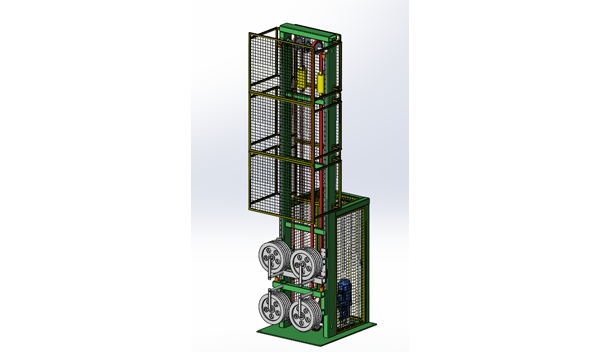
8. Frequently Asked Questions About the 5-Meter Vertical Cable Storage Rack
What is the main purpose of a 5-Meter Vertical Cable Storage Rack?
The main purpose is to organize cable materials in a vertical storage structure. It can help factories and warehouses make better use of available space while keeping cables more orderly and easier to manage.
Is this rack only suitable for cable factories?
No. It can also be considered for electrical manufacturers, warehouses, logistics centers, maintenance facilities, industrial workshops, and other locations where organized cable storage is required.
Can the rack configuration be customized?
Yes. We can discuss the rack size, storage arrangement, load requirements, and structure according to the customer's application. The final configuration should be confirmed before production.
Can I use the rack for different types of cables?
Yes, but the suitability depends on the cable size, weight, physical form, quantity, and handling method. We recommend providing these details so the storage arrangement can be discussed properly.
Does 5 meters mean the rack can be installed in any warehouse?
No. A 5-meter rack requires suitable installation conditions. The available building height, floor conditions, overhead equipment, access paths, handling equipment, and local requirements should be checked before installation.
How should the load capacity be determined?
The load requirement should be based on the actual materials to be stored and the intended storage arrangement. We do not recommend using a general load value without confirming the application.
How can I keep cables organized on the rack?
A simple classification system works well. Cables can be grouped by product type, specification, customer order, production batch, or another method that matches your warehouse management system. Clear identification also helps workers find materials faster.
How important are warehouse aisles?
They are very important. Storage should leave suitable space for workers and material-handling equipment. OSHA requires safe clearances for mechanical handling equipment and clear aisles and passageways in general industry workplaces.
How often should the rack be inspected?
The inspection schedule should be based on the operating environment, usage frequency, handling equipment, and company safety procedures. We recommend routine checks for visible damage, loose components, deformation, and other conditions that could affect safe use.
What should I provide when requesting a quotation?
Useful information includes the intended rack height, available installation space, cable type, cable dimensions, approximate material weight, storage quantity, access frequency, handling equipment, and destination. Photos or layout drawings of the storage area can also make technical communication easier.
What is the production time?
After technical specifications and order details are confirmed, the typical production and delivery cycle is around 30–90 days. The actual schedule depends on the final configuration, quantity, inspection requirements, and transportation conditions.
How will the rack be packaged?
Packaging depends on the rack structure and shipping requirements. Suitable methods may include protective film, steel frames, wooden cases, or other protective materials designed to reduce movement, scratches, impact, dust, and moisture during transportation.
How can the rack be transported internationally?
We can discuss sea freight, rail transportation, or other suitable transportation methods according to the destination, product dimensions, shipment requirements, and customer preference.
Final Thoughts
A good cable storage system does not need to be complicated. It needs to solve real warehouse problems.
For customers looking for a 5-Meter Vertical Cable Storage Rack for Cable Management, the main questions should be practical: How much cable needs to be stored? What type of cable is it? How heavy is the material? How high is the warehouse? How will workers move the cable? How often will the material be accessed? Where should the rack sit in relation to production and shipping?
Once these questions are clear, it becomes much easier to select a suitable storage structure.
Our 5-Meter Vertical Cable Storage Rack is designed around organized storage, practical space utilization, flexible configuration, and industrial use. We can discuss the structure according to the customer's actual requirements rather than relying on a one-size-fits-all solution.
At Wuxi Shuochuan Electromechanical Equipment Manufacturing Co., Ltd., we combine equipment manufacturing experience with practical customer communication. From requirement confirmation and configuration to production, inspection, packaging, and delivery, we aim to keep the process clear and straightforward.
If you are planning a new cable warehouse, upgrading an existing storage area, or looking for a more organized way to manage cable materials, the first step is to provide the basic application information. With the right details, we can discuss whether a 5-meter vertical cable storage rack is suitable for your facility and what configuration makes sense for your daily operation.
Technical Reference Sources
OSHA, 29 CFR 1926.250, General Requirements for Storage: guidance covering stable storage, safe floor loading, clear aisles, and storage of cylindrical materials.
OSHA, 29 CFR 1910.176, Handling Materials — General: guidance covering safe clearances, aisles and passageways, secure storage, and housekeeping.
OSHA, Warehousing — Hazards and Solutions: guidance on inspecting and maintaining shelving and racking, preventing rack damage, keeping within load capacities, and safe storage practices.
ISO, ISO 9001 — Quality Management Systems — Requirements: information on quality management systems and continual improvement.
Note: The referenced OSHA and ISO materials provide general industry guidance and quality-management information. They should not be interpreted as product-specific certification or as a substitute for local engineering, building, fire, or workplace-safety requirements.



 WhatsApp
 телефон