


 English
 中文
中文


In wire and Cable Production, material movement needs to stay controlled from one process to the next. When the material path is not stable, operators may see uneven movement, changes in tension, or problems during take-up and other continuous processes. This is where our Tension Hub for Wire and Cable Processing is designed to help.
At Wuxi Shuochuan Electromechanical Equipment Manufacturing Co., Ltd., we manufacture industrial equipment and auxiliary systems for continuous production. We understand that a small auxiliary component can have an important job when it becomes part of a complete wire or Cable Production Line. Our focus is therefore not simply on making a Tension Hub, but on making one that fits the customer's actual Production Process.
Our Tension Hub is designed for stable material guidance and tension management. It can be used with suitable wire and cable processing equipment and can also work together with take-up, unwinding, extrusion, and other auxiliary systems. The final configuration is discussed according to material type, line layout, production requirements, and working conditions.
We keep the design practical. We do not add technical claims that are not supported by the actual product configuration. Instead, we focus on reliable structure, convenient integration, reasonable adjustment, and a clear material path.
1. What Is a Tension Hub for Wire and Cable Processing?
A Tension Hub is an auxiliary component used in continuous material processing where controlled material movement and tension management are required. In a wire or cable Production Line, the material normally moves continuously through several stages. Depending on the product, these stages may include unwinding, extrusion, cooling, measuring, marking, inspection, take-up, or other processing steps.
During this process, the material cannot simply move from one machine to another without considering the material path. The direction, contact condition, tension, and relationship between different machines all affect how the material behaves.
Our Tension Hub for Wire and Cable Processing is intended to become part of this controlled material path. It provides a practical point for guiding and managing material movement within the production system.
We normally look at the Tension Hub together with the equipment around it. For example, if it is installed between an unwinding unit and another processing machine, we need to understand the incoming material condition and the required outgoing direction. If it is used near a take-up system, we also need to understand how the downstream equipment pulls and collects the material.
This is why we do not recommend choosing a tension-related component only by product name. The same type of component can be used under very different production conditions. Wire size, cable construction, surface condition, line arrangement, operating requirements, and equipment matching can all matter.
What Does the Tension Hub Do?
In simple terms, the Tension Hub helps manage the path of continuously moving material. It can provide guidance and support for material movement while working with other equipment in the production line.
It should not be understood as an independent device that automatically solves every tension problem. Actual line tension can be affected by the unwinding system, pulling equipment, take-up equipment, material properties, friction, line conditions, and other components.
We therefore treat tension management as a system-level issue. This approach helps us understand the customer's real problem before confirming the equipment configuration.
| Item | Typical Description |
|---|---|
| Product | Tension Hub |
| Main application | Wire and cable processing |
| Main function | Material guidance and tension management |
| Production type | Continuous industrial processing |
| Compatible equipment | Take-up, unwinding, extrusion and other auxiliary systems |
| Configuration basis | Material, line layout, operating requirements and working conditions |
2. How Does the Tension Hub Work?
The working principle is quite easy to understand when we follow the material through the production line.
Wire or cable enters the relevant section of the production line from an upstream process. The material then passes through the designed guidance path associated with the Tension Hub before continuing to the next production stage.
During this movement, the Tension Hub provides a controlled mechanical arrangement that helps guide the material. The exact contact method and configuration depend on the final equipment design and application.
Material Entry
The first step is the entry of the wire or cable into the working path. Proper alignment is important because a poorly aligned material path can create unnecessary side movement and uneven contact.
When we discuss a new application with a customer, we normally ask where the material comes from, where it needs to go, and what equipment is installed before and after the Tension Hub.
Guidance and Contact
The Tension Hub provides a controlled route for the moving material. The contact condition should match the material being processed. Different wires and cables may have different surface materials, flexibility, construction, and handling requirements.
For this reason, we do not assume that one contact arrangement is suitable for every cable product.
Tension Management
Tension is created and influenced by the complete production system. The Tension Hub works within this system rather than replacing the function of an unwinder, puller, or Take-up Machine.
For example, if an upstream unwinding system releases material unevenly, simply changing one downstream component may not solve the problem. Likewise, if the take-up system applies an unsuitable pulling condition, the material may still behave differently even when the guidance equipment is correctly installed.
Material Exit
After passing through the Tension Hub, the wire or cable continues toward the next processing stage. A well-planned material path should be easy for operators to understand and maintain.
This simple approach is one of the main ideas behind our equipment design: keep the material path clear, keep the structure practical, and make the equipment fit the complete production process.
| Factor | Why It Matters | Our Consideration |
|---|---|---|
| Wire or cable type | Different materials behave differently during movement | Material characteristics and handling requirements |
| Line direction | Affects the material path | Entry and exit arrangement |
| Upstream equipment | Influences incoming material condition | Unwinding and processing conditions |
| Downstream equipment | Influences material pulling and collection | Take-up and following process |
| Installation position | Affects access and alignment | Available workshop space and maintenance access |
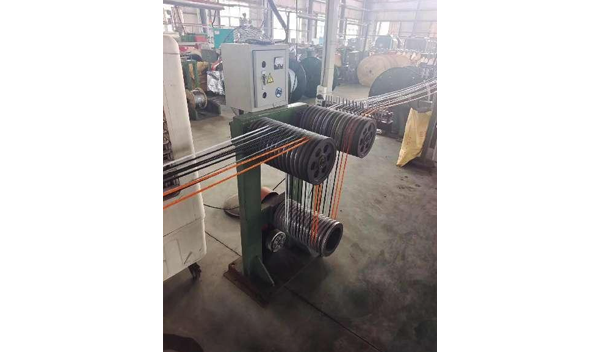
3. Main Features of Our Tension Hub
When we design Auxiliary Equipment, we always ask a basic question: will this feature make the customer's production easier to manage?
Our Tension Hub is built around several practical considerations.
Stable Material Guidance
Continuous wire and cable need a predictable path. Our Tension Hub is designed to support controlled material movement and reduce unnecessary changes in the material route.
Practical Tension Management
The equipment can be used as part of a complete tension management system. Its actual working effect depends on the surrounding equipment and the material being processed.
Flexible Configuration
We can discuss the configuration according to material type, production requirements, equipment layout, and working conditions. This is particularly useful when the customer needs to integrate the Tension Hub into an existing line.
Easy Equipment Integration
The Tension Hub can be combined with suitable take-up and unwinding equipment and other auxiliary equipment. The connection details depend on the actual production line.
Clear Working Structure
We prefer a structure that operators can understand. When an operator can easily see the material route and access the relevant parts for inspection, daily operation becomes simpler.
Suitable for Continuous Production
Wire and cable manufacturing is normally a continuous process. Equipment needs to work as part of that process rather than as an isolated workshop tool. We therefore consider line integration from the beginning of the project.
Adaptable to Different Applications
Our Tension Hub can be considered for different wire and cable processing applications. However, we always recommend checking the actual material and production conditions before finalizing the configuration.
We believe this practical attitude is important. Industrial equipment does not need to sound complicated to be useful. In many cases, a clear design that operators understand is much more valuable than unnecessary complexity.
4. Technical Advantages and Production Considerations
A tension-related component may look simple, but its performance depends on many surrounding conditions. From our experience with wire and cable equipment, there are several areas that deserve attention.
Material Alignment
Correct alignment is one of the first things we check. The incoming wire or cable should enter the working path in a suitable direction, and the outgoing path should connect naturally with the following equipment.
If the line is not properly aligned, operators may notice side movement, uneven contact, or other changes in material behavior. These issues are not always caused by the Tension Hub itself, so we prefer to inspect the whole material path.
Material Tension
Material tension can change because of many factors. The unwinding resistance, processing equipment, line speed, friction, take-up condition, and material properties can all have an influence.
Therefore, we do not describe our Tension Hub with a fixed tension value unless that value has been technically confirmed for a particular configuration.
Surface Protection
Wire and cable surfaces can be important, especially when the product has insulation, coating, or other finished surfaces. The material contact arrangement should be selected according to the product requirements.
When discussing a project, we recommend providing information about the product structure and surface condition. This helps us consider the appropriate contact and guidance arrangement.
Maintenance
Any equipment used in continuous production needs regular inspection. Operators should check the mechanical condition, material path, fasteners, contact parts, and other relevant components according to the actual equipment design.
A simple maintenance routine can help identify wear or abnormal conditions before they become larger production problems.
Safety Around Moving Material
Moving wire, cable, wheels, rollers, and other mechanical parts can create hazards. The final machine should therefore be assessed as a complete system, including guards and safe access arrangements.
OSHA 29 CFR 1910.212 requires machine guarding where hazards such as points of operation, ingoing nip points, and rotating parts may expose operators or other employees to injury. It also states that fixed machinery should be securely anchored to prevent unwanted movement. These requirements are useful reference points when planning the installation of equipment with moving components. OSHA 1910.212.
ISO 12100:2010 provides general principles and a methodology for machinery risk assessment and risk reduction. It covers hazard identification, risk evaluation, risk reduction, and verification during relevant stages of the machine life cycle. ISO 12100.
| Factor | Possible Effect | Recommended Approach |
|---|---|---|
| Material surface | Contact and movement behavior | Confirm product structure before configuration |
| Line alignment | Material tracking | Check the complete entry and exit path |
| Tension condition | Material stability | Consider upstream and downstream equipment |
| Mechanical movement | Operator safety | Consider suitable guarding and safe access |
| Inspection | Long-term operation | Establish routine checking and maintenance |
We use these considerations when discussing a project because they are more useful than simply listing technical words on a product page.
5. Applications in Wire and Cable Processing
The main target application of our product is continuous wire and cable processing. However, the actual application can vary depending on the customer's production line.
Electrical Wire Production
Electrical wire production often includes continuous extrusion and downstream processes. Material needs to move through the line in a controlled way, especially when several pieces of equipment are connected together.
Our Tension Hub for Wire Processing can be considered where additional material guidance and tension management are needed within the line.
Cable Manufacturing
Cable production may involve multiple processing stages and different cable constructions. The production line can include extrusion, cooling, diaMeter measurement, marking, take-up, and other operations.
In this type of application, the Tension Hub can become part of the material management system. Its exact location should be selected according to the complete production layout.
Wire and Cable Extrusion Lines
Extrusion is a continuous process, so material guidance after extrusion can be important. The finished product may still be warm, flexible, or sensitive to handling depending on the process.
We therefore recommend discussing the position of the Tension Hub in relation to the extrusion line, cooling section, measuring equipment, and take-up system.
Take-Up and Unwinding Systems
A Tension Hub can also work with take-up and unwinding systems. These machines have a direct relationship with material movement, so the combined system should be considered when determining the equipment arrangement.
Electronic Wire Production
Electronic wire often requires controlled handling because product construction and surface condition can be important. The exact requirements vary by wire type, so the material specification should be confirmed before final equipment selection.
Automotive Wire Production
Automotive wire production is another possible application area. The production line may involve continuous processing and controlled take-up. Our equipment can be considered as an auxiliary part of such systems when the material path and working conditions are suitable.
Photovoltaic Wire and Cable Production
Photovoltaic wire and cable production also uses continuous manufacturing processes. Material handling requirements should be considered together with extrusion, cooling, measurement, and take-up equipment.
Charging Pile Cable Production
Charging cable production is another area where continuous cable processing and material management are relevant. Depending on the cable structure and line configuration, a tension-related auxiliary component may be integrated into the production system.
| Application | Typical Production Environment | Potential Role of Tension Hub |
|---|---|---|
| Electrical wire | Continuous wire processing | Material guidance and tension management |
| Power cable | Continuous cable production | Controlled material movement |
| Electronic wire | Precision-oriented wire processing | Material path support |
| Automotive wire | Continuous wire production | Guidance within the production line |
| Photovoltaic cable | Continuous cable extrusion and processing | Material movement management |
| Charging cable | Continuous cable manufacturing | Support for controlled material movement |
IEC 60228:2023 specifies nominal cross-sectional areas and requirements for conductors used in a wide range of insulated electric power cables and cords. While this standard is about conductors rather than Tension Hub design, it shows why cable construction and material specifications need to be clearly understood when planning equipment for cable production. IEC 60228:2023.
6. How We Manufacture the Tension Hub
At Shuochuan, we treat manufacturing as more than simply cutting metal and assembling parts. For industrial equipment, the early technical discussion can be just as important as the final assembly.
Technical Requirement Confirmation
We first discuss the customer's application. Useful information includes the material type, production process, line layout, equipment before and after the Tension Hub, installation conditions, and any special requirements.
If the customer has a production-line drawing, equipment photograph, or simple sketch, it can make the technical discussion much easier.
Configuration and Design
After the requirements are clear, we determine the equipment configuration. The design is based on the customer's actual production conditions rather than a generic assumption.
This is particularly important when the Tension Hub is being added to an existing production line. Available installation space may be limited, and the material direction may already be fixed.
Component Processing
The required structural components are processed according to the confirmed design. Manufacturing methods depend on the actual structure and material requirements.
Assembly
Components are assembled after processing. During assembly, we pay attention to the relationship between the structural parts and the material path.
Inspection
Before shipment, the Tension Hub is inspected according to the agreed technical requirements. We check the assembled structure and relevant mechanical parts.
Testing
Testing is carried out according to the agreed product requirements and applicable production conditions. The exact testing method depends on the final equipment configuration.
Packaging
Once inspection and testing are completed, we prepare the equipment for transportation. Packaging may include protective film, steel frames, cartons, wooden cases, or other suitable materials.
The goal is simple: reduce the risk of moisture, dust, impact, scratches, and movement during transportation.
| Stage | Our Main Work | Customer Requirement |
|---|---|---|
| 1 | Technical discussion | Provide application and material information |
| 2 | Configuration confirmation | Confirm technical requirements |
| 3 | Manufacturing | Approve agreed configuration |
| 4 | Assembly | Confirm integration requirements where necessary |
| 5 | Inspection and testing | Review according to agreed requirements |
| 6 | Packaging and shipment | Confirm destination and transportation method |
Our typical production and delivery cycle is approximately 30–90 days after technical specifications and order details have been confirmed. The actual schedule can change according to the configuration, order quantity, production arrangement, inspection requirements, and transportation conditions.
Payment is normally arranged according to the contract. A common arrangement is a deposit followed by the balance before shipment, while other terms can be discussed according to the project.
For transportation, we can arrange sea freight, rail transportation, air transportation, or another suitable method according to the destination and equipment requirements.
7. Why Choose Wuxi Shuochuan?
Wuxi Shuochuan Electromechanical Equipment Manufacturing Co., Ltd. integrates R&D, manufacturing, and sales. Our work is closely connected with wire and cable production equipment, extrusion systems, take-up and unwinding equipment, and related auxiliary equipment.
Our main products include high-speed extruders, three-in-one BV extrusion automatic production lines, three-in-one plus one BVVB automated production lines, photovoltaic wire and cable production lines, automotive Wire Production Lines, electronic wire production lines, network communication wire production lines, cable production lines, charging pile cable production lines, take-up and unwinding series, auxiliary equipment, and raw materials.
This product background gives us a practical understanding of where a Tension Hub sits within a production line. We know that the auxiliary equipment needs to communicate with the main equipment through the material path, installation position, and operating conditions.
We Understand Complete Production Lines
We do not only look at the Tension Hub itself. We also consider what happens before and after it. This helps us discuss a more suitable installation position and configuration.
We Focus on Practical Engineering
We prefer straightforward equipment that is easy to understand and maintain. Industrial operators should not need a complicated manual just to understand the basic material path.
We Have Our Own Manufacturing Process
Our work covers technical communication, product development, manufacturing, assembly, inspection, testing, and delivery. This allows us to control the production process rather than simply acting as a trading company.
We Have Technical Development Experience
Shuochuan has obtained more than ten utility model patent certificates. We continue to develop equipment based on practical production needs and customer requirements.
We Care About Quality Control
The company has stated a commitment to quality management throughout the process from research and development to production. Our working philosophy is reflected in the company spirit: “Quality First, Continuous Improvement, and Honest Service.”
We Communicate Before We Manufacture
This may sound obvious, but it is one of the most useful parts of industrial equipment supply. Before manufacturing, we want the technical requirements to be clear. If something is uncertain, we ask the customer rather than making an unsupported assumption.
This approach also helps avoid one common problem in custom equipment projects: a machine may work mechanically but still not fit the customer's production line. We would rather spend more time discussing the application before production than spend more time correcting an installation problem after delivery.
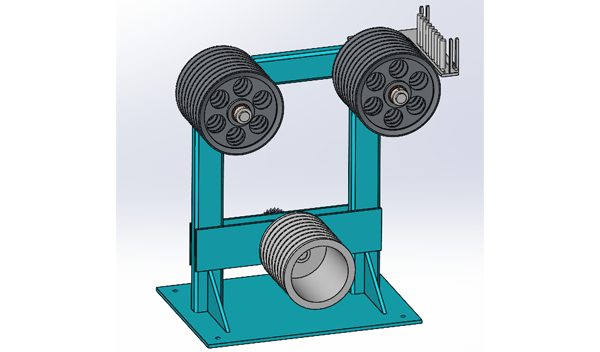
8. Tension Hub FAQ
Q1: What is the main purpose of the Tension Hub?
The main purpose is to support controlled material guidance and tension management during continuous wire and cable processing. It normally works as part of a complete production line rather than as an independent tension-control system.
Q2: Is the Tension Hub suitable for cable production?
Yes. It is designed around wire and cable processing applications and can be considered for different continuous cable production lines. The final suitability depends on cable construction, material condition, line layout, and operating requirements.
Q3: Can the Tension Hub be used with an extrusion line?
Yes. It can be integrated into a suitable extrusion production line where controlled material guidance is required. The installation position should be determined according to the extrusion process and the equipment before and after the Tension Hub.
Q4: Can it work with take-up equipment?
Yes. The Tension Hub can be used together with suitable take-up equipment. Because the take-up system affects material movement, we recommend considering the Tension Hub and take-up system as part of the same material-handling arrangement.
Q5: Can you customize the Tension Hub?
We can discuss the configuration according to the customer's material, production line, installation space, operating conditions, and technical requirements. The final configuration should be confirmed before manufacturing.
Q6: What information should I provide for a quotation?
We recommend providing the wire or cable type, basic product information, production process, material direction, equipment before and after the Tension Hub, available installation space, and any existing drawings or photographs. If you have a complete line diagram, that is even better.
Q7: Do you provide the complete wire and cable production line?
Yes. Our product range includes extrusion lines, photovoltaic wire and cable production lines, automotive wire production lines, electronic wire production lines, network communication wire production lines, cable production lines, charging pile cable production lines, take-up and unwinding equipment, and auxiliary equipment.
Q8: What is the normal production time?
The typical production and delivery cycle is around 30–90 days after the technical specifications and order details are confirmed. The exact schedule depends on the product configuration, production plan, inspection requirements, and transportation arrangements.
Q9: How do you inspect the equipment before shipment?
We assemble, inspect, and test the Tension Hub according to the agreed technical requirements before shipment. The exact inspection items depend on the confirmed configuration and customer requirements.
Q10: What payment terms are available?
Payment terms are arranged according to the contract. A common arrangement is a deposit and the remaining balance before shipment. Specific terms can be discussed according to the project.
Q11: How is the Tension Hub packaged?
Depending on the product structure and shipping requirements, packaging may include protective film, steel frames, cartons, wooden cases, or other suitable materials. The purpose is to protect the equipment from moisture, dust, impact, scratches, and movement during transportation.
Q12: Can you arrange international shipping?
Yes. We can arrange sea freight, rail transportation, air transportation, or another suitable method according to the destination, equipment dimensions, delivery schedule, and customer requirements.
Q13: Does the Tension Hub automatically control the entire line tension?
Not necessarily. Tension is affected by the complete production system. The unwinding unit, pulling equipment, take-up system, material characteristics, friction, and operating conditions can all influence tension. The Tension Hub should therefore be considered as one part of the complete material management system.
Q14: What should I check during daily maintenance?
Operators should check the mechanical condition, material path, contact parts, fasteners, and other relevant components according to the actual equipment configuration. Any abnormal wear, noise, movement, or material behavior should be investigated before continuing normal production.
Technical Reference Notes
We use practical manufacturing experience for product development and application discussions, while recognized standards provide useful reference points for safety and measurement-related topics.
ISO 12100:2010 provides general principles and a methodology for machinery safety, including risk assessment and risk reduction. The standard remains the current published edition while a revision is under development.
ISO 10012:2026 specifies requirements for measurement management systems and focuses on confidence in the validity and reliability of measurement results. The 2026 edition was published in February 2026.
OSHA 29 CFR 1910.212 provides general machine-guarding requirements for hazards including points of operation, ingoing nip points, and rotating parts, and includes requirements concerning fixed machinery anchoring.
IEC 60228:2023 specifies conductor sizes and related requirements for conductors used in a wide range of insulated electric power cables and cords.
These standards are reference information rather than a statement that every Tension Hub configuration automatically conforms to every requirement in each standard. The final safety design and compliance requirements should be determined according to the complete machine, installation environment, destination country, local regulations, and customer application.
Conclusion: A Practical Tension Solution for Wire and Cable Production
Our Tension Hub for Wire and Cable Processing is designed around a simple industrial need: keep continuous material movement controlled and make the production line easier to manage.
We know that wire and cable production is not just one machine. It is a connected process involving unwinding, extrusion, cooling, measurement, guidance, take-up, and other equipment. A tension-related component needs to fit into that complete system.
That is why we focus on material path, equipment integration, practical adjustment, inspection, and long-term usability rather than making unsupported performance claims.
If you are looking for a Tension Hub for Wire Processing, Tension Hub for Cable Manufacturing, or an auxiliary component for a continuous extrusion and take-up system, we can discuss your actual production conditions and determine a suitable configuration.
Please provide your material information, production-line layout, installation conditions, and technical requirements. We will review the application and communicate the equipment configuration before manufacturing.
At Shuochuan, our working principle remains straightforward: understand the customer's production needs, manufacture according to confirmed requirements, inspect and test before shipment, and provide honest communication throughout the project.



 WhatsApp
 телефон