


 English
 中文
中文

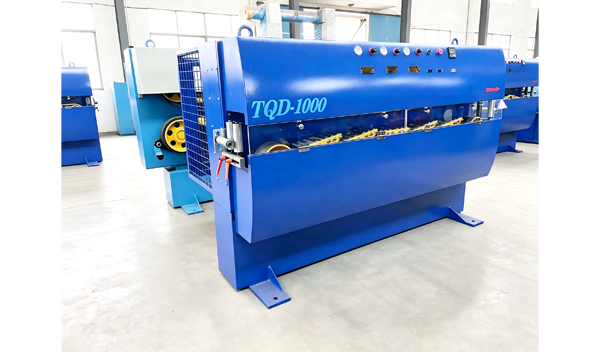
Moving materials around a farm sounds simple until the ground becomes soft, uneven, wet, or difficult to access. A normal road vehicle may not be suitable, and a Wheeled Tractor may not always provide the type of ground contact that the job requires. This is where our TQD-1000 Tracked Tractor for Agricultural Transportation becomes a practical option.
We designed the TQD-1000 Tracked Tractor for agricultural and outdoor operations where stable movement, dependable traction, and reliable operation are important. Its tracked traveling system gives the machine a different way to stay in contact with the ground compared with a conventional wheeled tractor.
Our focus is not simply to build a machine that looks strong. We pay attention to how the tractor will actually be used. Will it move agricultural materials? Will it work on soft farmland? Will it travel across uneven fields? Will it be used for outdoor transportation or other agricultural tasks? These questions matter before we confirm the final configuration.
The TQD-1000 Tracked Tractor can be considered for agricultural transportation, field operations, crop-related work, landscaping, forestry-related outdoor operations, municipal maintenance, and other suitable applications. The exact use should always match the final technical configuration and local working conditions.
At Wuxi Shuochuan Electromechanical Equipment Manufacturing Co., Ltd., we integrate R&D, manufacturing, and sales. We have obtained more than ten utility model patent certificates and have passed ISO 19001 quality management system certification according to our company information. We follow a simple working principle: quality first, continuous improvement, and honest service.
1. What Is the TQD-1000 Tracked Tractor?
The TQD-1000 Tracked Tractor is a tracked agricultural machine intended for transportation and other suitable outdoor operations. Unlike a conventional wheeled tractor, it uses a continuous track system as its traveling mechanism.
The product name “TQD-1000” is used as the model or product designation. We do not treat the number in the product name as a substitute for detailed technical specifications. Engine power, dimensions, speed, load requirements, attachments, and other paraMeters should be confirmed in the final technical documentation.
This distinction is important when buying industrial equipment. A model name helps identify a product, but the actual working ability of a machine depends on its complete configuration.
For example, a customer may need the tractor mainly for agricultural transportation. Another customer may use it for field preparation or outdoor material movement. The two applications may have different requirements even when the basic tractor model is the same.
That is why we prefer to understand the application first and then confirm the machine configuration.
Why use a tracked tractor for transportation?
The main reason is ground contact.
A tracked tractor uses a continuous track that runs around the traveling assembly. A longer section of the track can remain in contact with the ground. In suitable conditions, this helps spread the machine's contact over a larger area.
This can be useful when agricultural transportation takes place on soft soil, uneven fields, farmland paths, landscaping areas, or other outdoor surfaces where stable movement is important.
FAO explains that agricultural mechanization is used across many stages of farming and food supply chains, including land preparation, planting, harvesting, storage, transport, and marketing. It also emphasizes that machinery should be suited to local conditions and actual user needs.
We follow the same basic idea. We do not recommend choosing a tractor simply because it has a certain model name. We look at the work first.
Typical transportation applications
Agricultural material transportation
Farm equipment movement
Crop-related transportation tasks
Field transportation
Outdoor material handling
Transportation across suitable soft-soil areas
Landscaping material movement
Forestry-related outdoor transportation
Municipal outdoor maintenance
For buyers searching for a tracked tractor for agricultural transportation, the important point is to match the machine with the route, ground, material, and operating conditions.
2. How Does the TQD-1000 Tracked Tractor Work?
The working principle of our tracked tractor is not difficult to understand.
The power unit generates driving force. The transmission system transfers this force to the traveling mechanism. The track then moves around the tractor and pushes against the ground, allowing the tractor to move forward or backward.
When the operator changes the direction or movement control, the traveling system responds accordingly. The machine's movement depends on the interaction between the power system, transmission, track assembly, ground condition, and operator control.
The track is the part that makes the biggest visual difference compared with a wheeled tractor.
Instead of relying on several individual tire contact points, the track creates a longer continuous contact area. This can help maintain traction in suitable outdoor environments.
Basic operating process
The operator starts the tractor and checks basic operating conditions.
The power system provides the driving force.
The transmission system transfers power to the traveling mechanism.
The track assembly rotates.
The track contacts the ground and generates traction.
The tractor moves according to operator control.
The operator adjusts movement according to the transportation route and ground condition.
This is a simple mechanical process, but real-world performance depends on many factors. Soil moisture, terrain, slope, surface condition, tractor configuration, operating speed, attachment, and transportation requirements can all affect the result.
Tracked tractor compared with wheeled tractor
| Comparison Item | Tracked Tractor | Wheeled Tractor |
|---|---|---|
| Traveling system | Continuous track | Wheels and tires |
| Ground contact | Longer continuous contact area | Individual wheel contact areas |
| Soft-soil applications | Can be suitable for selected soft-soil conditions | Depends on tire and ground conditions |
| Uneven outdoor ground | Can be considered for suitable uneven terrain | Depends strongly on configuration and surface |
| Transportation application | Suitable for selected agricultural and outdoor routes | Suitable for many general agricultural routes |
Source: General engineering comparison based on agricultural mechanization principles and tractor testing considerations published by FAO and OECD. It is not a performance test result for the TQD-1000 model.
3. Main Features of the TQD-1000 Tracked Tractor
When we discuss the TQD-1000 Tracked Tractor for Agricultural Transportation, we focus on several practical features rather than simply listing a long collection of specifications.
Continuous track structure
The track system is the most important structural feature. It gives the tractor a different type of ground contact compared with a wheeled machine.
This can be useful for agricultural transportation across selected soft, uneven, or challenging outdoor surfaces. It does not mean that every soft or steep surface is automatically suitable. Actual application still needs to be evaluated.
Stable movement
Transportation work requires controlled movement. The tractor may need to move materials between different working areas, follow a field route, or operate on an uneven outdoor surface.
A tracked design can provide useful stability in suitable working environments because the machine maintains continuous contact along the track.
Useful traction
Traction is especially important when the tractor needs to move while carrying out pulling or transportation work.
We look at traction as part of the complete system rather than treating it as an isolated number. The power system, transmission, track, surface, operating conditions, and machine configuration all influence how effectively the tractor can transfer driving force to the ground.
Suitable for outdoor applications
The TQD-1000 can be considered for agricultural fields, farmland transportation routes, landscaping sites, forestry-related work, and other suitable outdoor environments.
We recommend confirming the exact terrain and operating conditions before placing an order, especially when the machine will work on slopes, very soft soil, or other demanding surfaces.
Application-based configuration
We do not assume that every customer needs exactly the same setup.
Some buyers may focus on transportation. Others may need a tractor for field preparation or general agricultural operations. The final configuration should therefore be discussed according to the actual application.
Practical maintenance
Tracked machinery works directly with soil, mud, plants, dust, and outdoor debris. Regular inspection is therefore important.
After operation, the operator should check the track system and other exposed components according to the equipment instructions. Cleaning, inspection, lubrication where applicable, and timely attention to unusual noise or movement can help keep the machine in good working condition.
4. Technical Advantages for Agricultural Transportation
When customers ask us about technical advantages, we normally start with one simple question: “What exactly are you going to transport, and where will the tractor work?”
This question may sound basic, but it can save a lot of trouble later.
A tractor transporting materials on a firm farm road has a different job from one moving materials across soft farmland. The same applies to a landscaping site or forestry area.
Ground contact and traction
The tracked structure gives the tractor a long contact area with the ground. This changes the way the machine interacts with the surface.
OECD tractor testing includes drawbar power and fuel-consumption tests because tractors often need to convert engine power into useful pulling power. OECD also has specific provisions for tracklaying tractor protective structures under its tractor testing codes.
In its Code 2 guidelines, OECD distinguishes track slip from wheel slip in the reporting of drawbar performance. The published test procedure reports track-laying tractor performance up to 7% mean track slip under that standardized test method. This is a testing reference, not a claim about the TQD-1000's actual field performance.
We include this point because it shows why tractor performance should be discussed using proper test conditions rather than vague claims such as “strong traction.”
Transportation stability
When moving agricultural materials, stability matters just as much as movement itself.
The operator needs to control the tractor along the planned route. The machine should be used within its confirmed technical and operating limits.
For this reason, we recommend reviewing the transportation route before operation. Check the surface, slope, width, obstacles, turning area, and any other conditions that could affect safe movement.
Matching the tractor to the working environment
FAO's guidance on agricultural mechanization repeatedly stresses the importance of selecting equipment suited to local conditions. Mechanization is not simply about buying larger or more powerful machinery. The equipment should match the work that needs to be done.
That is exactly how we approach the TQD-1000.
We would rather confirm the actual job before production than promise that one configuration can solve every transportation problem.
Important technical factors
Ground condition
Transportation route
Required traction
Terrain and slope
Material to be transported
Required attachment or trailer arrangement
Operating speed requirements
Machine dimensions
Local safety requirements
Maintenance and service conditions
What tractor performance testing can cover
| Testing Area | What It Evaluates | Usefulness for Buyers |
|---|---|---|
| Engine power output | Power measured at the PTO under standardized conditions | Helps understand power-related performance |
| Drawbar power | Power available for pulling work | Relevant to traction and towing applications |
| Fuel consumption | Fuel used during standardized tests | Useful for comparing tested tractor performance |
| Hydraulic power | Hydraulic output available at auxiliary connections | Relevant when hydraulic equipment is used |
| Three-point lift capacity | Hydraulic lifting capability at the linkage | Important for compatible mounted implements |
Source: OECD Standard Codes for Official Testing of Agricultural and Forestry Tractors. These are general testing categories and are not specific TQD-1000 test results.
PTO and attachment considerations
If the tractor will operate PTO-driven equipment, the PTO requirements need to be confirmed before production.
ISO 500-1:2014 specifies general requirements for certain rear-mounted PTO types, including speeds, safety requirements, master-shield dimensions, and clearance zones. ISO states that this edition was reviewed and confirmed in 2024 and remains current.
Therefore, if a customer plans to use the TQD-1000 with an implement, we recommend providing the implement information early. This allows the relevant interface and configuration requirements to be discussed before manufacturing.
5. Where Can the TQD-1000 Be Used?
The TQD-1000 is mainly positioned around agricultural transportation, but its tracked structure can also make it useful in other suitable outdoor applications.
Agricultural material transportation
This is the core application.
Farms need to move many different materials. Depending on the operation, these may include agricultural tools, crop-related materials, supplies, equipment, or other items.
Our TQD-1000 Tracked Tractor for Agricultural Transportation is intended to support this type of movement where the working environment is suitable for a tracked tractor.
Farm transportation
Farm roads are not always paved. Some are narrow, soft, uneven, or affected by weather.
A tracked tractor can be considered when the transportation route requires stable tracked movement rather than ordinary road travel.
Field operations
Besides transportation, the tractor can be considered for selected field operations according to the final configuration.
FAO identifies land preparation, planting, crop management, harvesting, storage, and transport among the areas where mechanization can support agricultural work.
Landscaping
Landscaping sites can contain soil, grass, uneven ground, and temporary access routes. A tracked machine may be considered for selected material movement and outdoor tasks.
Before use, we recommend checking the surface and route carefully, especially when the area is close to finished roads, buildings, or sensitive landscaping.
Forestry-related transportation
Some forestry and outdoor operations require equipment that can work away from paved roads.
The TQD-1000 may be considered for suitable forestry-related transportation tasks, but forestry environments can be more demanding than ordinary farmland. Slope, obstacles, ground condition, weather, and local safety requirements should be assessed first.
Municipal outdoor maintenance
Municipal maintenance can involve parks, green areas, drainage areas, and other outdoor locations.
Where the site conditions match the tractor's confirmed configuration, the machine can be considered for suitable material movement and maintenance operations.
Application comparison
| Application | Main Requirement | Role of Tracked Design |
|---|---|---|
| Agricultural transportation | Move materials across working areas | Provides continuous track-based ground contact |
| Farm operations | Stable movement in fields | Can suit selected soft or uneven surfaces |
| Field preparation | Traction and controlled movement | Track system supports ground contact |
| Landscaping | Outdoor mobility | Can be considered for selected uneven ground |
| Forestry-related work | Outdoor transportation | Can suit selected challenging terrain |
| Municipal maintenance | Equipment movement in outdoor areas | Useful where tracked movement matches site conditions |
Source: Application categories are based on the stated product applications and general agricultural mechanization areas identified by FAO. Final suitability depends on the working environment and confirmed tractor configuration.
6. How We Manufacture, Inspect, and Deliver the TQD-1000
For an industrial machine, manufacturing quality is not only about the final appearance. The process from technical confirmation to shipment matters.
Step 1: Confirm the application
Before production, we first confirm what the customer wants to do with the tractor.
For the TQD-1000, this may include agricultural transportation, field work, outdoor material movement, or another suitable application.
We also need to understand the working environment. Soil, terrain, transportation route, attachments, destination, and other technical details can affect the final configuration.
Step 2: Confirm technical specifications
After the application is clear, we confirm the technical specifications and configuration with the customer.
This is an important step because the product name itself does not provide every engineering detail. We do not invent missing specifications. We confirm them.
Step 3: Manufacturing and assembly
After the order and technical details are confirmed, we arrange production.
The tractor is assembled according to the agreed configuration. Key mechanical assemblies and traveling components are installed and checked during the Production Process.
Step 4: Inspection and testing
Before delivery, each tractor is assembled, inspected, and tested according to the agreed technical requirements.
We check basic operation and the overall condition of the machine. This helps us identify problems before the equipment leaves the factory.
We consider this step especially important for international orders. Once the machine is shipped overseas, solving a small assembly problem becomes much harder than solving it before shipment.
Step 5: Packaging
After inspection, we prepare the tractor for transportation.
Depending on the tractor structure and shipping conditions, we can use protective film, steel frames, wooden cases, or other suitable packaging materials.
The purpose is straightforward: reduce the risk of moisture, dust, impact, and unwanted movement during transportation.
Production cycle
Our normal production period is approximately 30–90 days after the technical specifications, configuration, and order details have been confirmed.
The actual schedule depends on the final configuration, production arrangement, component availability, inspection requirements, and order details.
We prefer to confirm a realistic delivery schedule after the order information is complete rather than promise an unrealistic fixed date before the technical details are known.
Transportation
For international delivery, we can arrange transportation by sea, rail, or another suitable method depending on the destination, tractor dimensions, and shipping requirements.
The final transportation plan should consider the machine dimensions, packaging method, destination, loading requirements, and local import arrangements.
Payment
Payment terms can be arranged according to the contract. A common arrangement is a deposit followed by the balance before shipment. Other mutually agreed payment terms can also be discussed.
We recommend confirming the payment arrangement, technical configuration, production schedule, inspection requirements, and delivery method clearly before production starts.
7. Why Choose Wuxi Shuochuan?
When buying a tractor from overseas, the supplier matters almost as much as the machine.
Technical communication can become difficult when the customer and manufacturer are in different countries. Small misunderstandings about configuration, transportation, packaging, or application can create unnecessary problems.
We therefore try to keep our process clear and practical.
R&D and manufacturing experience
Wuxi Shuochuan Electromechanical Equipment Manufacturing Co., Ltd. integrates R&D, manufacturing, and sales. We have obtained more than ten utility model patent certificates, reflecting our focus on product development and technical improvement.
Our company also develops and manufactures automated industrial equipment, including high-speed extruders, BV and BVVB extrusion Production Lines, photovoltaic wire and Cable Production lines, automotive Wire Production lines, electronic Wire Production Lines, network communication wire production lines, Cable Production Lines, charging pile cable production lines, take-up and unwinding equipment, Auxiliary Equipment, and raw materials.
This background gives us a practical manufacturing mindset. We understand that industrial equipment needs to work reliably, not simply look good in a catalog.
Quality management
According to our company information, we have passed ISO 19001 quality management system certification.
Our internal approach follows the company spirit of Quality First, Continuous Improvement, and Honest Service.
For us, quality includes correct assembly, agreed configuration, basic operational testing, inspection before delivery, and appropriate shipment preparation.
Clear technical communication
We encourage customers to tell us how they will use the tractor.
If the customer needs agricultural transportation, we want to know about the transportation route. If the tractor will work on soft farmland, we want to understand the ground conditions. If attachments are required, we want to know the attachment information before production.
This makes the purchasing process much more practical.
International delivery support
We can discuss sea, rail, or other suitable transportation options according to the destination and machine dimensions.
Packaging can also be discussed based on shipping conditions. Protective film, steel frames, wooden cases, or other suitable materials may be used according to the actual machine and transportation plan.
We focus on the real application
One of the biggest mistakes in industrial equipment purchasing is focusing too much on the product name and not enough on the application.
We prefer to do the opposite.
Tell us what the TQD-1000 needs to do. Tell us where it will work. Tell us what it needs to transport. Then we can discuss the appropriate configuration.
8. FAQ About the TQD-1000 Tracked Tractor
What is the TQD-1000 Tracked Tractor?
The TQD-1000 Tracked Tractor is a tracked agricultural machine designed for agricultural transportation and suitable outdoor operations. The exact technical specifications should be confirmed according to the final product documentation and order configuration.
What does “TQD-1000” mean?
“TQD-1000” is the product or model designation provided for this tractor. We do not interpret the number as a specific engine power, load capacity, track width, or other technical parameter unless it is clearly defined in the final technical documentation.
What is the main application of this tractor?
The main stated application is agricultural transportation. It can also be considered for suitable farming, field preparation, landscaping, forestry-related outdoor work, municipal maintenance, and other transportation tasks according to the final configuration.
Why use a tracked tractor instead of a wheeled tractor?
A tracked tractor uses a continuous track and therefore has a different ground-contact pattern from a wheeled tractor. This can be useful in selected soft-soil, uneven, or challenging outdoor conditions. However, the correct choice always depends on the actual working environment.
Can the TQD-1000 work on soft farmland?
The tracked structure is suitable for selected soft-soil conditions because it provides a larger continuous ground-contact area. However, actual suitability depends on soil moisture, terrain, slope, tractor configuration, operating conditions, and other factors.
Can it be used for agricultural material transportation?
Yes. Agricultural transportation is the main application described for this product. The machine can be considered for moving suitable materials and equipment across agricultural working areas according to the confirmed configuration.
Can the tractor be used for field preparation?
It can be considered for suitable field preparation applications, provided the final tractor configuration and compatible equipment meet the requirements of the specific operation.
Can the TQD-1000 be used with attachments?
Attachment compatibility depends on the final configuration. If you plan to use a specific implement, trailer, PTO-driven machine, or hydraulic equipment, please provide the relevant information before production so the requirements can be reviewed.
How long does production take?
Our normal production cycle is approximately 30–90 days after the technical specifications, configuration, and order details are confirmed. The actual schedule depends on the final order and production arrangement.
How is the tractor inspected before shipment?
Before delivery, we assemble, inspect, and test each tractor according to the agreed technical requirements. We check basic operation and the overall condition before shipment.
How is the TQD-1000 packaged?
Depending on the machine structure and transportation conditions, we can use protective film, steel frames, wooden cases, or other suitable packaging materials. The packaging is intended to help protect the machine from moisture, dust, impact, and movement during transportation.
How can the tractor be shipped internationally?
Transportation can be arranged by sea, rail, or another suitable method depending on the destination, tractor dimensions, and shipping requirements.
What are the payment terms?
Payment terms can be arranged according to the contract. A common arrangement is a deposit and balance before shipment, although other mutually agreed terms can also be discussed.
What information should I provide for a quotation?
We recommend providing the intended application, working environment, soil and terrain conditions, transportation route, material or equipment to be moved, required attachments, destination, quantity, and any available technical requirements.
The more information we have at the beginning, the easier it is to confirm a suitable configuration and realistic production schedule.
Final Thoughts on the TQD-1000 Tracked Tractor
We see the TQD-1000 Tracked Tractor for Agricultural Transportation as a practical machine for agricultural and outdoor transportation where tracked movement makes sense.
Its continuous track structure gives it a different way to interact with the ground compared with a wheeled tractor. This can be useful in selected soft-soil, uneven, and outdoor working environments.
But we do not believe that one tractor should be presented as the answer to every agricultural problem. Good equipment selection starts with the actual work.
FAO makes a similar point in its agricultural mechanization guidance: the appropriate level and type of mechanization should meet the user's needs and local conditions. More machinery does not automatically mean better machinery.
For this reason, when you contact us about the TQD-1000 Tracked Tractor, we recommend telling us as much as possible about your application. Explain where the tractor will work, what it needs to transport, what the ground is like, what attachments may be required, and where the machine will be delivered.
We can then discuss the configuration, production schedule, inspection process, payment terms, packaging, and transportation arrangement based on clear information.
Our goal is straightforward: build the agreed equipment carefully, inspect it before shipment, and provide practical support throughout the order process.
If you are looking for a tracked tractor for agricultural transportation, TQD-1000 tracked tractor for farm transportation, or a tracked agricultural tractor for outdoor operations, we welcome you to discuss your requirements with us.
Technical and Reference Sources
Food and Agriculture Organization of the United Nations (FAO) — Sustainable Agricultural Mechanization.
Food and Agriculture Organization of the United Nations (FAO) — Why Mechanization Is Important.
Food and Agriculture Organization of the United Nations (FAO) — Mechanization Strategies.
OECD — Standard Codes for the Official Testing of Agricultural and Forestry Tractors.
OECD — Guidelines on Code 2: Testing of Tractor Performance.
ISO 500-1:2014 — Agricultural Tractors, Rear-Mounted Power Take-Off Types and Safety Requirements.
Note: The technical standards and industry references above are used as general reference information. They do not represent specific certification, laboratory test results, engine power, load capacity, speed, or other performance data for the TQD-1000 unless such data are separately confirmed in the product's technical documentation.



 WhatsApp
 телефон