


 English
 中文
中文


In cable manufacturing, wrapping is one of those processes that looks simple from the outside but needs careful control during real production. The material has to move smoothly, the cable needs to stay stable, and the wrapping action needs to remain consistent from the beginning to the end of the production run. A small problem in feeding or tension can become a much bigger problem when the line keeps running.
Our Φ600/2 Half-cut Wrapping Machine (Motor Driven) is developed for continuous wrapping applications in wire and Cable Production. It is designed around practical production needs, with a motor-driven structure, controlled material movement, and a layout that can be configured according to the customer's cable structure and wrapping requirements.
We do not treat every cable wrapping project as exactly the same. Different cables use different materials and have different structures. Some require insulation-related wrapping, while others may need a separating or protective layer. Because of this, we confirm the cable design, wrapping material, production conditions, and related requirements before the final equipment configuration is decided.
The product name includes Φ600/2 and Half-cut, which are part of the equipment designation. We do not assume that these terms represent a specific cable diaMeter, output, or production speed unless those parameters have been confirmed in the technical specification. The final machine configuration is based on the actual project requirements.
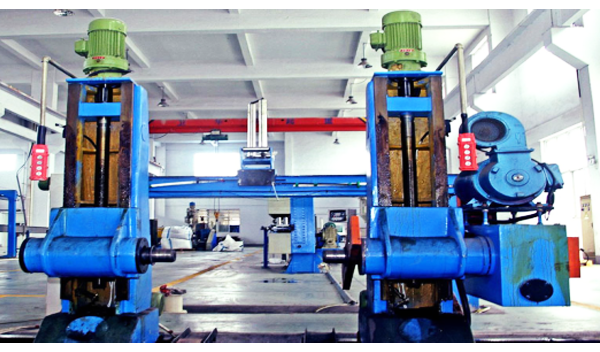
1. What Is the Φ600/2 Half-cut Wrapping Machine?
Simply put, our Φ600/2 Half-cut Wrapping Machine is used to apply wrapping material around a wire, cable, or cable component during continuous production.
The machine uses a motor-driven operating structure to keep the wrapping process moving in a controlled way. The material is fed toward the wrapping section, guided into the required position, and applied around the cable as the Production Line continues to run.
The word "wrapping" covers many different production requirements. A cable may need a non-metallic tape, strip, film, paper-based material, or another suitable wrapping material depending on its design. The material selection is therefore not something we decide simply from the machine name.
Before we manufacture the equipment, we normally want to know:
What type of cable will be produced?
What material will be used for wrapping?
What is the cable structure?
What type of wrapping process is required?
What production conditions does the customer have?
How will the machine connect with upstream and downstream equipment?
What working environment will the equipment be installed in?
These questions may seem basic, but they are useful. A wrapping machine is part of a Production Process, not a standalone product that can be correctly selected by model name alone.
Why Motor Driven Operation Matters
The motor-driven structure provides controlled mechanical movement for the wrapping process. In a continuous cable line, stable movement is important because the wrapping action and cable movement need to work together.
If the material movement changes unexpectedly, the wrapping result can change as well. That is why we pay attention to the relationship between material feeding, winding action, cable movement, and take-up.
We also try to keep the operating logic practical. The operator needs to understand where the material goes, how the cable travels, and how the equipment should be adjusted for the agreed production condition.
What Does Half-cut Mean?
"Half-cut" is included in the product name supplied for this machine. We use the customer's actual technical specification to confirm the exact meaning and working arrangement of the half-cut structure for a specific project.
Rather than inventing a detailed mechanism from the name alone, we confirm the actual configuration during technical communication. This is especially important when the machine will be integrated into an existing Cable Production Line.
2. How Does the Wrapping Process Work?
We can explain the working process in a straightforward way. The cable moves through the machine while the wrapping material is supplied and guided toward the wrapping section. The material is then applied around the cable according to the required process.
Although the basic idea is simple, several parts need to work together.
Step 1: Cable Enters the Machine
The cable or cable component comes from the previous manufacturing process. Depending on the complete production line, this may be an insulated wire, laid-up cable core, or another cable component.
The incoming cable should have a stable path through the machine. If the cable moves from side to side unnecessarily, it can make the wrapping process harder to control.
Step 2: Wrapping Material Is Prepared
The wrapping material is installed in the material supply section. The actual material depends on the customer's product design.
Non-metallic materials are common in many cable constructions. Their characteristics can vary significantly, so we consider flexibility, width, thickness, surface condition, and other relevant properties during equipment configuration.
Step 3: Material Feeding
The material is guided toward the wrapping section. Stable feeding is important because the material should not suddenly become loose or excessively tight during normal production.
Material tension is one of the practical points we discuss with customers. The correct condition depends on the material and cable structure rather than one universal number.
Step 4: Wrapping
The wrapping mechanism applies the material around the cable while the cable continues to move. The actual wrapping pattern depends on the product specification.
For some cable designs, wrapping may be used to form or separate a cable layer. In other designs, it may be part of insulation or protection. The final purpose is determined by the cable design and applicable product requirements.
Step 5: Finished Cable Moves to the Next Process
After wrapping, the cable can continue to the next production stage or move to a take-up system, depending on the complete line layout.
This is why we always recommend looking at the whole process. The wrapping machine should match the cable line around it instead of being selected separately from the other equipment.
| Process Stage | Main Function | Key Production Concern |
|---|---|---|
| Cable Feeding | Move cable into the wrapping section | Stable cable path |
| Material Supply | Provide wrapping material | Correct material and stable supply |
| Material Guiding | Guide material toward the wrapping area | Alignment and movement |
| Wrapping | Apply material around the cable | Consistent wrapping condition |
| Take-up / Next Process | Move or collect finished cable | Stable downstream handling |
Source: This process table represents the general operating logic of continuous cable wrapping equipment. The exact sequence and machine configuration depend on the customer's cable structure and production requirements.
3. Main Features of Our Φ600/2 Half-cut Wrapping Machine
When we design cable production equipment, we try to focus on the things operators actually deal with every day. A machine can have a long list of features, but if the material path is difficult to understand or the equipment is hard to adjust, those features do not help much on the factory floor.
Motor-Driven Wrapping Operation
The machine uses a motor-driven structure for the wrapping process. This gives the equipment a controlled mechanical drive and supports continuous production.
For cable manufacturers, the main benefit is not simply that a motor is installed. The important point is that the movement of the wrapping system needs to stay coordinated with the cable and material feeding process.
Stable Material Movement
Wrapping material needs to travel through the machine in a controlled way. We pay attention to the material path because unstable feeding can affect the final wrapping condition.
The actual feeding arrangement is confirmed according to the selected material and customer requirements.
Flexible Cable Production Application
The machine can be considered for different wire and cable applications where a wrapping process is required. These can include electrical wires, power cables, photovoltaic cables, automotive wires, electronic wires, communication cables, and charging cables, depending on the product structure.
Practical Equipment Layout
We aim to make the machine layout easy to understand. Material loading, material guiding, wrapping, and cable movement should have a clear relationship.
This is useful during daily production because operators can identify the material route and operating points more easily.
Suitable for Customized Projects
We can discuss customized configurations according to the customer's cable structure, wrapping material, production requirements, and working conditions.
Customization does not mean adding unnecessary parts. In our view, it means adjusting the machine so that it fits the actual production process.
Inspection Before Shipment
Before shipment, we assemble, inspect, and test the machine according to the agreed technical requirements.
This step is important because a production machine should be checked before it leaves the factory. It is much easier to identify and correct an issue during factory inspection than after the equipment has been transported to another country.
4. Technical Advantages and Material Considerations
When discussing a Φ600/2 Half-cut Wrapping Machine for cable manufacturing, we normally spend more time talking about process conditions than simply talking about machine appearance.
The reason is simple. Cable wrapping is closely connected to the material being used and the structure of the cable.
Wrapping Material Can Change the Process
Not all wrapping materials behave in the same way. Some materials are flexible and easy to guide. Others may be more sensitive to tension, temperature, surface friction, or handling conditions.
This is why we ask for material information before confirming the final machine configuration.
International cable standards also show that material-specific testing matters. For example, IEC 60811-513:2012 defines a wrapping test after conditioning for certain polyethylene and polypropylene compounds used in electric and optical fibre cables. The standard applies to specific insulation materials and test conditions rather than to every cable material.
Wrapping Quality Depends on More Than Speed
It is tempting to think that faster production is always better. In real cable manufacturing, this is not always true.
The machine needs to operate at a suitable condition for the cable and wrapping material. If the material is not fed properly, increasing speed does not solve the problem.
We therefore focus on stable movement, correct material guiding, suitable tension, and coordination between the wrapping section and the cable line.
Controlled Cable Path
The cable should follow a clear path through the machine. A stable path helps reduce unnecessary movement during wrapping.
This becomes even more important when the machine is connected to other equipment. The upstream and downstream machines can influence cable tension and movement, so the complete line needs to be considered.
Relationship Between Wrapping and Cable Construction
Wrapping can have different roles in different cable designs. It may be used as a separation layer, protective layer, insulation-related layer, or part of the cable forming process.
For example, some cable specifications describe paper or non-hygroscopic tape wrapping around a cable core, with the wrapping applied helically or longitudinally with overlap. This shows why the wrapping method must be considered together with the final cable construction rather than treated as a generic process.
| Factor | Why It Matters | Our Approach |
|---|---|---|
| Material Type | Different materials have different handling characteristics | Confirm material before final configuration |
| Material Tension | Can influence wrapping consistency | Consider feeding and tension conditions |
| Cable Movement | Unstable movement can affect wrapping | Keep a controlled cable path |
| Wrapping Pattern | Depends on cable construction | Configure according to the product requirement |
| Production Speed | Needs to match the process condition | Confirm during technical discussion |
Source: Material and wrapping considerations are supported by cable-related IEC references, including IEC 60811-513:2012 and cable construction requirements described in relevant product specifications.
Why We Avoid Guessing Technical Parameters
There is a common problem with industrial product pages: they often publish a long list of technical numbers without explaining where those numbers come from.
We prefer not to do that.
The actual production speed, cable range, material width, motor configuration, wrapping condition, and other parameters should be confirmed according to the customer's product.
For example, a wrapping material suitable for one cable may not be suitable for another. The same is true for production settings.
So when a customer contacts us, we first look at the product. Then we determine the appropriate machine configuration.
5. Applications in Wire and Cable Manufacturing
The Φ600/2 Half-cut Wrapping Machine is intended for wrapping applications in the wire and cable industry. The final application depends on the cable structure and material selected for the project.
Electrical Wire Production
Electrical wires may require different insulation and protective structures depending on their intended use. Where a wrapped layer is part of the design, our machine can be considered as part of the production process.
Power Cable Production
Power cables often contain several layers, and wrapping can be one part of the overall cable construction.
IEC 60502-1 is an example of an international cable standard covering construction, dimensions, and testing requirements for certain power cables with extruded insulation. The standard also describes cable constructions that can include inner coverings, fillers, and metal layers. The exact standard applicable to a customer's cable depends on the final product.
Photovoltaic Cable Production
Photovoltaic cables can require carefully controlled insulation and protective structures. If the cable design includes a wrapping process, the machine can be configured around the required material and production method.
Automotive Wire Production
Automotive wiring products can have compact and varied constructions. Stable feeding and controlled wrapping are useful when a wrapped layer is included in the cable structure.
Electronic Wire Production
Electronic wires often require controlled handling because their structures can be relatively compact. A stable material path helps operators maintain consistent production conditions.
Communication Cable Production
Communication cables use different constructions depending on their type. Some cable designs include wrapped or protective layers around the core. We recommend confirming the cable structure and applicable specification before selecting the final wrapping arrangement.
Charging Cable Production
Charging cables are another possible application. Depending on the product structure, wrapping can form part of the complete cable manufacturing process.
| Application | Typical Product | Possible Wrapping Purpose |
|---|---|---|
| Electrical | Electrical wire and cable | Insulation, separation, or protection |
| Power | Power cable | Layer forming or protection |
| Solar | Photovoltaic cable | Product-specific cable layer |
| Automotive | Automotive wire | Wrapping or protective structure |
| Electronics | Electronic wire | Product-specific wrapping layer |
| Communication | Communication cable | Core or protective wrapping |
| Charging | Charging cable | Product-specific protective structure |
Source: The application categories are based on the wire and cable products supported by our equipment range. The exact wrapping function must be confirmed against the final cable design and applicable product specification.
6. How We Manufacture and Deliver the Machine
We believe the machine itself is only one part of a successful equipment project. The technical discussion before production, manufacturing process, factory inspection, packaging, transportation, and communication after delivery all matter.
Technical Confirmation
We first discuss the customer's cable and production requirements.
For the Φ600/2 Half-cut Wrapping Machine (Motor Driven), useful information includes the cable type, wrapping material, cable structure, required wrapping process, production arrangement, and working conditions.
If the customer already has a production line, we also need to understand the equipment around the wrapping machine. This helps us consider the connection between different production stages.
Machine Manufacturing
After the technical details are confirmed, we begin manufacturing and assembly according to the agreed configuration.
Wuxi Shuochuan Electromechanical Equipment Manufacturing Co., Ltd. integrates R&D, manufacturing, and sales. Our product range includes high-speed extruders, automatic BV and BVVB extrusion production lines, photovoltaic wire and cable production lines, automotive Wire Production Lines, electronic wire production lines, network communication wire production lines, cable production lines, charging pile cable production lines, take-up and unwinding equipment, Auxiliary Equipment, and related materials.
This background gives us a useful view of cable manufacturing as a complete process. A wrapping machine does not work alone. It often needs to cooperate with extrusion, stranding, take-up, unwinding, or other equipment.
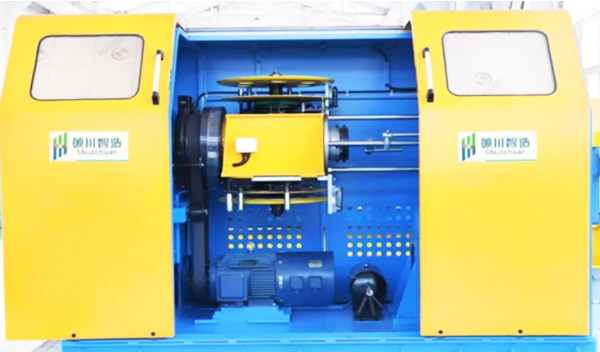
Inspection and Testing
Before shipment, we assemble, inspect, and test the equipment according to the agreed technical requirements.
We check the machine's operating condition and relevant production functions before delivery. The exact inspection items depend on the final technical specification.
Production Cycle
After the technical specifications and order details are confirmed, our typical production and delivery cycle is around 30–90 days.
This is a general project range. The actual schedule can change depending on the machine configuration, customization requirements, production workload, and order details.
Payment Terms
Payment terms can be arranged according to the contract. A common arrangement is a deposit followed by the balance before shipment. Other mutually agreed payment arrangements can also be discussed according to the project.
Transportation
We can arrange transportation by sea, rail, or another suitable method depending on the destination and equipment dimensions.
For international equipment projects, transportation needs to be considered together with packaging, loading, unloading, and installation conditions.
Packaging
We select packaging according to the machine structure and transportation conditions. Protective film, steel frames, wooden cases, or other suitable packaging methods can be used.
The purpose is practical: reduce the risk of moisture, dust, impact, and movement during transportation.
| Project Item | General Arrangement | Final Confirmation |
|---|---|---|
| Technical Configuration | Based on cable and wrapping requirements | Before production |
| Production Cycle | Typically 30–90 days | According to confirmed order |
| Inspection | Assembly, inspection, and testing | Before shipment |
| Payment | Deposit + balance before shipment is common | According to contract |
| Transportation | Sea, rail, or suitable alternatives | Based on destination |
| Packaging | Protective film, steel frame, wooden case, etc. | Based on equipment and transport conditions |
Source: Production, inspection, payment, transportation, and packaging information in this table is based on our company's stated project arrangements.
7. Why Work With Wuxi Shuochuan?
Choosing cable production equipment is not just about comparing two machine names. The more important question is whether the supplier understands the production process and can communicate clearly about the equipment.
That is the approach we take at Wuxi Shuochuan.
We Understand Cable Production Equipment
Our company focuses on the research, development, manufacturing, and sales of automated equipment for wire and cable production.
Our equipment range covers extrusion, wire and cable production lines, take-up and unwinding equipment, and related auxiliary equipment. This means we can discuss a wrapping machine from the perspective of the complete production process.
We Have Our Own Technical Development
According to our company information, we have obtained more than ten utility model patent certificates. We continue to improve our equipment based on manufacturing experience and customer production requirements.
We do not see patents as a reason to stop improving. A production machine still needs to work properly on the factory floor. That is where practical engineering matters.
We Focus on Clear Communication
Industrial equipment projects can become complicated when technical terms are not clearly explained.
We try to keep the communication straightforward. We discuss what the customer produces, what material is used, what the production line needs to do, and what kind of equipment arrangement makes sense.
We Follow a Quality Management Process
Our company has obtained ISO 19001 quality management system certification according to the company information provided by us. We use our internal management process throughout R&D and production.
For each machine, we also arrange assembly, inspection, and testing before shipment according to the agreed technical requirements.
We Support Different Cable Applications
Our broader product range covers photovoltaic wire and cable, automotive wire, electronic wire, network communication cable, charging pile cable, and other cable production applications.
This helps us understand that cable manufacturers do not all have the same production requirements.
Our Working Principle
Our corporate spirit is “Quality First, Continuous Improvement, and Honest Service.”
For us, these words are connected to daily work. Quality means checking the machine before delivery. Continuous improvement means listening to production feedback. Honest service means explaining what the equipment can and cannot do instead of promising something without technical confirmation.
Our goal is “Creating first-class products and ensuring customer satisfaction.”
8. FAQ About Φ600/2 Half-cut Wrapping Machine (Motor Driven)
Q1: What is the Φ600/2 Half-cut Wrapping Machine used for?
It is designed for wrapping applications in wire and cable production. Depending on the cable structure and wrapping material, it can be used as part of production processes for electrical wires, power cables, photovoltaic cables, automotive wires, electronic wires, communication cables, charging cables, and other suitable cable products.
Q2: Is this a motor-driven wrapping machine?
Yes. The product is specified as a Motor Driven wrapping machine. The motor-driven structure provides controlled mechanical movement for the wrapping process.
Q3: What materials can be used with the machine?
The suitable material depends on the customer's cable design and process requirements. Non-metallic Wrapping materials can be considered for suitable applications. We recommend providing the material type, dimensions, and available technical information before finalizing the machine configuration.
Q4: Does Φ600 mean the machine handles a 600 mm cable?
Not necessarily. We treat Φ600/2 as part of the supplied product designation unless a specific technical specification confirms what the value represents. We do not interpret it as a cable diameter or other technical parameter without confirmation.
Q5: What does Half-cut mean?
Half-cut is part of the product name. The exact mechanical meaning and configuration should be confirmed according to the technical specification for the specific project. We avoid assigning an unsupported technical definition to the term.
Q6: Can you customize the machine?
Yes. We can discuss the configuration according to the customer's cable structure, wrapping material, production requirements, and working conditions.
Q7: Can this machine be integrated into an existing cable production line?
It can be considered for integration into a complete cable production line. Whether it can directly connect with a specific upstream or downstream machine depends on the cable structure, line layout, mechanical interface, and production requirements.
Q8: What information should I provide when asking for a quotation?
We recommend providing the cable type, cable structure, wrapping material, material dimensions, required wrapping method, production requirements, and available drawings or process information. If the machine will be connected to an existing line, information about the related equipment is also useful.
Q9: How long is the production period?
After the technical specifications and order details are confirmed, our typical production and delivery cycle is around 30–90 days. The actual schedule depends on the equipment configuration, customization requirements, production workload, and project conditions.
Q10: Do you test the machine before shipment?
Yes. We assemble, inspect, and test the machine according to the agreed technical requirements before shipment.
Q11: What payment terms do you offer?
Payment terms are arranged according to the contract. A deposit with the balance paid before shipment is a common arrangement, while other mutually agreed terms can also be discussed.
Q12: How will the machine be shipped?
We can arrange sea freight, rail transportation, or other suitable transportation methods depending on the destination and equipment dimensions.
Q13: How do you package the equipment?
We select packaging according to the equipment structure and transportation conditions. Protective film, steel frames, wooden cases, or other suitable packaging methods may be used to protect the machine during transportation.
Q14: Can the machine be used for non-metallic wrapping?
Yes, the equipment can be considered for suitable non-metallic wrapping applications. The actual material compatibility needs to be confirmed according to the material type, cable structure, and production conditions.
Q15: Why should I provide the cable structure before buying the machine?
Because the wrapping process is connected to the cable structure. The required material, wrapping method, tension condition, and production arrangement can change from one cable product to another. Knowing the complete cable structure allows us to recommend a more suitable configuration.
Conclusion
The Φ600/2 Half-cut Wrapping Machine (Motor Driven) is designed for manufacturers that need a practical and controlled wrapping solution for wire and cable production.
Our focus is not simply to build a machine that can wrap material. We want the machine to fit the actual production process. That means understanding the cable structure, selecting suitable wrapping materials, controlling material movement, maintaining a stable cable path, and making sure the equipment can work together with the rest of the production line.
We also understand that equipment buyers need more than a product name. They need clear information about customization, manufacturing time, inspection, payment, transportation, packaging, and after-sales communication.
For this reason, we normally begin with technical discussion. Once the cable and wrapping requirements are clear, we can confirm the appropriate equipment configuration. After the order is confirmed, we organize manufacturing and assembly, followed by inspection and testing before shipment.
Our broader experience in extrusion and cable production equipment also allows us to look at wrapping from the perspective of the complete manufacturing process. This is particularly useful when customers are planning a new cable production line or adding wrapping equipment to an existing line.
If you are looking for a Φ600/2 Half-cut Wrapping Machine for cable manufacturing, we welcome you to provide your cable structure, wrapping material, production requirements, and available technical information. We can then discuss the machine configuration based on your real production needs rather than relying on assumptions.
Technical References
IEC 60811-513:2012 – Electric and optical fibre cables, test methods for non-metallic materials, including a wrapping test after conditioning for specified polyethylene and polypropylene compounds.
IEC 60502-1:2021 – Power cables with extruded insulation and related construction, dimensions, and test requirements for cables within its scope.
IEC 60317-27-1:2020 – Requirements for paper tape covered round copper winding wires, showing how tape-covered wire products can have specific material and construction requirements.
Note: The standards listed above are technical references only. The applicable standard depends on the final cable product, material, destination market, and customer specification. Compliance with a particular standard should be evaluated for the finished cable and the applicable production process.



 WhatsApp
 телефон