

Main Technical Specifications
| Item | Specification |
| Equipment Purpose | This equipment is mainly used for extrusion of silicone‑rubber wire & cable insulation and sheathing; it can produce single‑core or multi‑core wire & cable insulation or sheathing in a single‑pass extrusion with continuous vulcanization forming. |
| Applicable Material | Cold‑feed extrusion of silicone rubber, etc. |
| Vulcanization Process | Oven vulcanization, water cooling |
| Extruded Outer DiaMeter | 1.8–5 mm (conductor range 0.5–6 mm², thickness 0.4–1.5 mm) |
| Main Unit Center Height | 1000 mm |
| Operation Direction | To be confirmed according to site layout |
| Equipment Color | Main color: blue RAL5015; rotating parts: orange‑red RAL3020 |
| Electric Cabinet Color | RAL7035 |
| Conductor Cross‑section | 0.2 mm² ~ 2.5 mm² |
| Base Material | Fire‑resistant ceramicized silicone rubber |
| Insulation Thickness | 0.45 mm ~ 0.60 mm |
| Wire Type | Annealed bare Copper Wire; mica‑layer annealed copper wire |
| Wire‑in Diameter | 0.5 mm ~ 2.5 mm |
| Insulated Wire‑out Diameter | 0.9 mm ~ 4.0 mm |
| Line Speed | ≤300 m/min |
SC-65 New Energy Silicone Rubber Drying Tunnel Vulcanization Production Line
When I talk about Silicone Rubber Extrusion Equipment, I usually start with one simple point: a good Production Line is not only about extrusion speed. It is about keeping the whole process stable, from feeding the silicone rubber material to extrusion, drying, vulcanization, cooling, and final take-up. If one part is unstable, the finished wire, cable, tube, or profile can also become unstable.
That is why we developed the SC-65 New Energy Silicone Rubber Drying Tunnel Vulcanization Production Line. It is designed for continuous silicone rubber extrusion and vulcanization, with a production concept focused on stable processing, controlled operation, and practical manufacturing needs. The line can be configured for different silicone rubber products, especially products used in new energy, wire and cable, automotive, electrical, electronic, and industrial applications.
At Wuxi Shuochuan Electromechanical Equipment Manufacturing Co., Ltd., we work on extrusion equipment with a manufacturing mindset rather than simply selling a machine. We pay attention to material feeding, temperature control, extrusion stability, vulcanization conditions, cooling, take-up, machine operation, and the connection between each process. This helps our customers build a Production Process that is easier to operate and maintain.
The word “65” in SC-65 identifies the machine model. It should not be treated as a guaranteed production speed, output, temperature, or finished-product size unless that specification is confirmed for a particular configuration. Silicone rubber products can be very different, so we normally confirm the material, product structure, conductor size, extrusion requirements, vulcanization process, and production target before finalizing the equipment configuration.
The SC-65 New Energy Silicone Rubber Drying Tunnel Vulcanization Production Line is a continuous production system designed for silicone rubber extrusion and subsequent drying and vulcanization. In simple terms, the silicone rubber material enters the extrusion process, is formed into the required shape, passes through a controlled drying and vulcanization section, and then continues toward cooling and take-up.
Silicone rubber is popular because it can remain flexible over a wide range of working conditions and can provide useful insulation, sealing, and heat resistance. But processing silicone rubber is not the same as processing ordinary plastic. The production process needs stable feeding, controlled extrusion, suitable vulcanization conditions, and careful handling after the material leaves the die.
For this reason, I see the production line as one complete system rather than several separate machines. The extruder needs to work together with the drying tunnel, vulcanization section, cooling system, take-up equipment, and other auxiliary components. A good line should allow these parts to work together smoothly.
The SC-65 line is particularly suitable for manufacturers working with silicone rubber wires, cables, tubes, profiles, seals, and other continuous products. Depending on the final product, the equipment can be configured according to different production requirements.
Typical application areas include:
New energy wire and cable manufacturing
Electric vehicle wiring systems
Charging Cable Production
Photovoltaic-related cable applications
Automotive silicone rubber wire
Electrical insulation products
Electronic wire and cable products
Communication cable applications
Industrial silicone rubber tubes
Silicone rubber sealing products
Flexible heat-resistant profiles
Other continuous silicone rubber extrusion products
For customers searching for a silicone rubber extrusion production line, the important question is not simply whether a machine can extrude silicone rubber. The more useful question is whether the complete line can match the customer's material, product dimensions, production target, and vulcanization process.
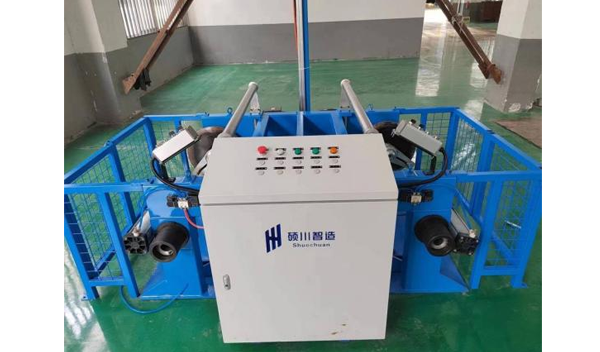
I normally explain the process in several simple steps. The exact configuration can change according to the product, but the basic production idea remains similar.
The first step is material preparation and feeding. Silicone rubber must enter the extrusion system in a stable and continuous way. If feeding is uneven, the extrusion output can fluctuate, which may affect the finished product.
Our approach is to pay attention to the feeding process as part of the complete production system. The material characteristics, formulation, production speed, and required product shape all influence the final feeding arrangement.
After feeding, the material moves through the extruder. The extrusion system applies controlled mechanical force to form the silicone rubber into the required shape through an extrusion die.
For wire and cable production, this may mean coating a conductor with silicone rubber. For other products, the die can form tubes, strips, seals, or other continuous profiles.
The key point here is stability. If the extrusion process changes too much, the product dimensions may also change. That is why stable material feeding, controlled processing conditions, and appropriate machine adjustment are important.
After extrusion, the silicone rubber product enters the drying tunnel and vulcanization section. This is one of the most important parts of the production line.
Vulcanization changes the physical structure of silicone rubber and helps the extruded material develop the properties required for its final use. The drying and vulcanization process needs to match the silicone rubber material and product design.
The tunnel must provide a controlled processing environment. Depending on the selected process and customer requirements, the actual temperature, tunnel length, line speed, and other settings need to be confirmed during technical design.
After vulcanization, the product needs to be cooled in a controlled manner before the next production stage. Cooling helps stabilize the finished material and prepares it for take-up or further processing.
The final continuous product is collected by the take-up system. Proper take-up tension is important because excessive or insufficient tension can affect the product during winding.
This is particularly important for long continuous products such as silicone rubber wire and cable. A stable take-up system helps keep the finished roll neat and easier to handle.
| Production Stage | Main Purpose | What We Pay Attention To |
|---|---|---|
| Material Feeding | Provide stable material supply | Feeding stability and material characteristics |
| Extrusion | Form silicone rubber into the required shape | Extrusion stability and product dimensions |
| Drying | Support controlled material processing | Process conditions and uniform treatment |
| Vulcanization | Develop the required rubber properties | Temperature, residence time, and material requirements |
| Cooling | Stabilize the finished product | Cooling consistency and product handling |
| Take-Up | Collect the continuous product | Winding stability and tension control |
Source: Process structure based on the SC-65 product configuration and general silicone rubber extrusion process principles. Exact equipment configuration and process paraMeters are confirmed according to the customer's product and material requirements.
When designing a New Energy Silicone Rubber Production Line, we focus on practical production needs. A machine may look impressive on paper, but the real test is how it performs during daily production.
The SC-65 system is designed for continuous silicone rubber extrusion. Stable extrusion is especially important for wire and cable products because production usually involves long continuous lengths.
We focus on the relationship between feeding, extrusion, vulcanization, cooling, and take-up rather than treating the extruder as an isolated machine.
Silicone rubber processing requires suitable process control. Different silicone materials and product structures can require different processing conditions.
We therefore avoid using one fixed process setting for every product. Before production, we discuss the customer's material and product requirements and then confirm the appropriate configuration.
The drying tunnel is a key feature of this type of production line. It provides the space and controlled environment needed for the post-extrusion process.
For manufacturers producing silicone rubber cables and profiles, stable vulcanization can be just as important as stable extrusion. If vulcanization is not properly controlled, the final product may not achieve the required physical properties.
Not every silicone rubber manufacturer produces the same product. One customer may focus on new energy cables, while another may produce automotive wires or silicone rubber tubes.
Because of this, configuration flexibility is important. We can discuss the customer's material, conductor, product diameter, production target, take-up requirements, and factory conditions before confirming the equipment.
Automation should make daily work easier, not make the machine difficult to understand. Our company has always paid attention to human-machine operation when developing automated equipment.
For operators, clear controls and stable machine behavior can make production management easier. For maintenance personnel, reasonable equipment structure and accessible components can also reduce unnecessary downtime.
The demand for silicone rubber wire and cable products continues to grow in applications where flexibility, insulation, temperature resistance, and reliable electrical performance are important.
The SC-65 can therefore be considered for new energy cable manufacturing and related production requirements, subject to confirmation of the exact product specification.
When a customer asks me which Silicone Rubber Extruder they should buy, I do not recommend choosing only by model number. A production line should be selected based on the actual product and process.
Here are the main points I normally suggest checking.
Different silicone rubber compounds can behave differently during extrusion and vulcanization. Material formulation, viscosity, curing system, and product requirements can all affect the machine configuration.
A silicone rubber wire is different from a silicone rubber tube or sealing profile. The conductor, insulation thickness, outer diameter, cross-section, and surface requirements can all influence the extrusion system.
Production output should be discussed together with product size, material, and quality requirements. A high theoretical speed is not automatically useful if the finished product cannot maintain stable dimensions.
The vulcanization section needs to match the silicone rubber material and line speed. Tunnel design, heating conditions, residence time, and product handling are all related.
The take-up system should match the finished product. Small flexible wires, larger cables, tubes, and profiles may require different winding arrangements.
A drying tunnel vulcanization production line needs enough installation space. Before delivery, customers should consider the machine footprint, production direction, operator access, maintenance space, electrical connections, ventilation, and other factory conditions.
| Selection Factor | Why It Matters | Information We Need From the Customer |
|---|---|---|
| Material | Affects extrusion and vulcanization conditions | Silicone rubber type and material information |
| Product | Determines extrusion and die requirements | Product drawing, dimensions, structure |
| Production Target | Influences line configuration | Required output and working schedule |
| Vulcanization | Affects tunnel and process design | Required curing process and product properties |
| Take-Up | Influences finished roll quality | Roll size, tension, winding requirements |
| Factory Conditions | Ensures practical installation | Available space and utilities |
Source: Wuxi Shuochuan technical selection workflow and customer-specific equipment configuration requirements. Final specifications are confirmed before production.
This approach may take a little more communication at the beginning, but it can prevent many problems later. For industrial equipment, I believe that is time well spent.
The SC-65 is designed around silicone rubber extrusion and vulcanization, so its applications are connected with industries that need continuous silicone rubber products.
New energy systems often require cables that can operate reliably under demanding conditions. Silicone rubber can be used where flexibility, insulation, and temperature resistance are important.
The SC-65 can be considered for new energy cable production, including selected cable products used in electric vehicles, charging systems, energy equipment, and related electrical applications.
Modern vehicles contain many electrical and electronic systems. Wiring can be exposed to heat, vibration, movement, and limited installation space.
Silicone rubber insulation can be useful for selected automotive wire and cable products. Our silicone rubber wire extrusion machine concept is suitable for manufacturers that need continuous extrusion and vulcanization for these products.
Renewable energy equipment requires reliable electrical connections and cable systems. Depending on the product design and material requirements, silicone rubber can be used in selected cable applications.
For photovoltaic-related products, the actual cable standard and material specification must always be confirmed before selecting the production process.
Charging equipment is another area where flexible and insulated cable products are needed. The exact material structure depends on the cable design, electrical requirements, working environment, and applicable standards.
Our production line can be configured around the customer's specific charging cable production requirements rather than assuming that every charging cable uses the same process.
Silicone rubber is also used for electrical insulation, flexible components, protective tubes, and selected electronic products.
For these applications, the production line needs to maintain a stable extrusion process and consistent finished dimensions.
Not every application is related to cables. Silicone rubber is also used for seals, strips, tubes, and continuous profiles.
These products can have different cross-sections and surface requirements, so the extrusion die and downstream equipment need to be selected according to the actual product.
| Industry | Typical Silicone Rubber Products | Important Production Considerations |
|---|---|---|
| New Energy | Wires, cables, flexible insulation products | Electrical insulation and process stability |
| Automotive | Automotive wires and flexible components | Heat, flexibility, vibration-related requirements |
| Electrical | Insulation products and cables | Dimensions and insulation consistency |
| Electronics | Flexible wires, tubes, protective products | Fine extrusion control and surface quality |
| Communication | Selected insulated cable products | Stable continuous extrusion |
| Industrial | Seals, tubes, strips, profiles | Cross-section and surface consistency |
Source: Application categories are based on the stated application scope of silicone rubber extrusion equipment and Shuochuan's product development direction. Actual suitability depends on material, product design, and applicable industry standards.
Buying an industrial production line is very different from buying a standard consumer product. The machine normally needs to be prepared according to the customer's requirements. Our work therefore starts well before the machine enters the workshop.
Before production, we communicate with the customer about the product, material, required output, machine configuration, installation conditions, delivery schedule, and other technical details.
If the customer has product drawings, material information, production requirements, or existing process data, these can help us understand the project more accurately.
After the technical details are confirmed, we arrange equipment manufacturing and assembly. Our company integrates R&D, manufacturing, and sales, which allows technical requirements to be connected more closely with the production process.
Wuxi Shuochuan has obtained more than ten utility model patent certificates. These patents reflect our continued work on equipment development and technical improvement.
Before shipment, each machine is assembled, tested, and inspected according to the agreed requirements. We check machine operation and the main functions of the production system before it leaves our factory.
For a complete silicone rubber vulcanization production line, the relationship between different equipment sections is particularly important. We therefore pay attention not only to individual components but also to the overall production line.
The standard delivery normally includes the complete silicone rubber extruder or production line equipment, necessary components, technical documents, and accessories specified in the confirmed order.
The exact delivery list can vary according to the project configuration. We recommend confirming the packing list and technical documents before shipment so both sides have a clear understanding of what is included.
Payment terms are normally arranged according to the contract. For customized industrial equipment, a common arrangement is a deposit before production and the remaining balance before shipment.
The exact payment schedule should always be confirmed in the commercial contract.
Depending on the destination, machine size, delivery schedule, and customer requirements, transportation can be arranged by sea, air, or land.
For large industrial production lines, sea transportation is often practical. When delivery time is more important or the equipment size allows it, other transportation options can also be discussed.
Long-distance transportation can expose industrial equipment to vibration, humidity, loading, unloading, and handling risks. We therefore normally use moisture-resistant materials, protective cushioning, and strong export wooden cases or pallets as appropriate.
The final packaging method depends on the equipment size and transportation arrangement.
| Project Stage | Our Main Work | Customer Confirmation |
|---|---|---|
| Technical Discussion | Review product and process requirements | Material, product, output, configuration |
| Production | Manufacture and assemble equipment | Confirmed technical specifications |
| Testing | Check equipment operation | Agreed testing requirements |
| Packaging | Protect equipment for transportation | Packing and shipping arrangements |
| Shipment | Arrange transportation and documents | Destination and delivery schedule |
Source: Wuxi Shuochuan Electromechanical Equipment Manufacturing Co., Ltd. standard equipment production, inspection, delivery, and packaging process described for silicone rubber extrusion equipment. Project-specific terms are confirmed by contract.
We are not a company that only focuses on putting together one machine and sending it out. Our business covers R&D, manufacturing, and sales, with a wider product range covering extrusion equipment and complete wire and cable production solutions.
Our main products include high-speed extruders, three-in-one BV extrusion automatic production lines, three-in-one plus one BVVB automated production lines, photovoltaic wire and Cable Production Lines, automotive Wire Production lines, electronic Wire Production Lines, network communication wire production lines, cable production lines, charging pile cable production lines, take-up and unwinding equipment, Auxiliary Equipment, and related raw materials.
This broader experience is useful when customers need more than a standalone extruder. In many real projects, the extruder is only one part of the production process. Take-up, unwinding, cooling, control, auxiliary equipment, and material handling can all affect the final production result.
Our company follows the working principles of Quality First, Continuous Improvement, and Honest Service. For us, this is not simply a sentence for a company profile. It is a practical way to approach equipment projects.
We also continue to invest in technical development. The company has obtained more than ten utility model patent certificates and has developed automated equipment with a focus on efficiency, energy saving, and operator-friendly operation.
The company states that it has passed ISO 19001 quality management system certification. Because certification status can change over time and the designation should be verified against the current certificate, customers requiring certification documentation can request the latest valid certificate from us during project evaluation.
More importantly, we prefer to make technical requirements clear before production. If a customer needs a SC-65 silicone rubber extruder, we first need to understand what the machine will actually produce. That conversation helps us avoid simply recommending equipment based on a model number.
The SC-65 is designed for continuous silicone rubber extrusion together with drying and vulcanization. It can be considered for silicone rubber wires, cables, tubes, profiles, seals, and other continuous products, depending on the final configuration.
The line is positioned for new energy silicone rubber applications, but it is not limited to one product type. It can also be considered for automotive, electrical, electronic, communication, industrial sealing, and other silicone rubber extrusion applications when the product and process requirements are suitable.
No. The “65” is used as the model designation. It should not be interpreted as a guaranteed production speed, output, temperature, or product diameter. The actual specifications depend on the equipment configuration and customer requirements.
Yes, the production line can be configured for silicone rubber wire and cable applications. However, the conductor size, insulation thickness, silicone rubber material, required production output, vulcanization process, and take-up requirements should be confirmed before the equipment is finalized.
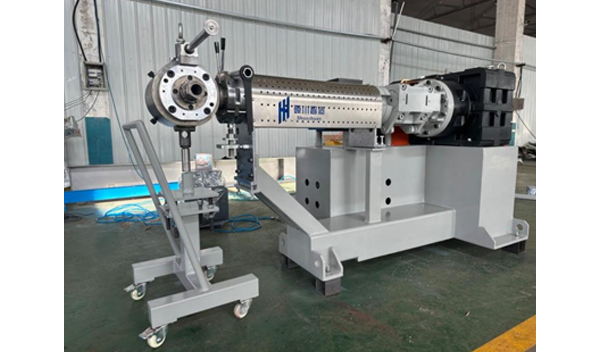
It can be considered for suitable silicone rubber automotive wire products. The final equipment configuration should be based on the customer's wire structure, material, production requirements, and applicable product standards.
Industrial extrusion projects often require customized configurations. We normally confirm the material, product structure, production target, vulcanization requirements, take-up method, factory conditions, and other technical details before production.
Production lead time depends on the model, equipment configuration, customization requirements, order quantity, and current production schedule. We confirm the expected delivery schedule after the technical specifications are agreed.
Before shipment, the machine is assembled, tested, and inspected according to the agreed specifications. For complete production lines, we also pay attention to the connection and operation of the main process sections.
Standard delivery generally includes the complete silicone rubber extruder or production line, necessary components, technical documents, and accessories specified in the confirmed order. The final packing list depends on the project configuration.
We can arrange transportation by sea, air, or land depending on the destination, equipment size, delivery schedule, and customer requirements. Large production lines are commonly suitable for sea transportation.
We normally use moisture-resistant materials, protective cushioning, and strong export wooden cases or pallets where appropriate. The final packaging method depends on the equipment configuration and transportation method.
I recommend providing as much practical information as possible, including the silicone rubber material, finished product type, product dimensions, conductor information if applicable, required production output, vulcanization requirements, take-up requirements, destination, and any available product drawings.
The more accurate the initial information is, the easier it is for us to recommend a suitable silicone rubber extrusion machine and prepare a useful quotation.
The SC-65 New Energy Silicone Rubber Drying Tunnel Vulcanization Production Line is built around a simple production idea: keep the silicone rubber extrusion process stable and make the complete production line work as one system.
For new energy wire and cable manufacturers, the value of a production line is not measured only by the nameplate of the extruder. Stable feeding, controlled extrusion, reliable drying and vulcanization, consistent cooling, and steady take-up all matter. The same principle applies to automotive wire, electrical products, electronic cables, silicone rubber tubes, sealing products, and continuous profiles.
At Wuxi Shuochuan, we approach each project from the actual product rather than from a standard machine description. We discuss the material, product structure, production target, process requirements, and factory conditions before confirming the equipment. This helps us build a more practical connection between engineering design and daily production.
If you are looking for a SC-65 silicone rubber extrusion production line, a new energy silicone rubber extrusion line, or a silicone rubber drying and vulcanization line, the first step is to define the product you want to manufacture. Once those details are clear, we can discuss the appropriate configuration, production process, delivery schedule, and commercial terms with you.
Our goal remains straightforward: create reliable equipment, improve the production process step by step, and provide honest service throughout the project.
Этот веб-сайт использует файлы cookie, чтобы обеспечить вам максимально эффективное использование нашего веб-сайта.


 English
 中文
中文



 WhatsApp
 телефон