


 English
 中文
中文


When I talk about cable stranding equipment with customers, I usually start with one simple point: a Stranding Machine is not just a machine that twists several wires together. It has to keep the conductor moving steadily, maintain suitable tension, control the twisting process, and produce a cable structure that remains consistent from the beginning of a reel to the end.
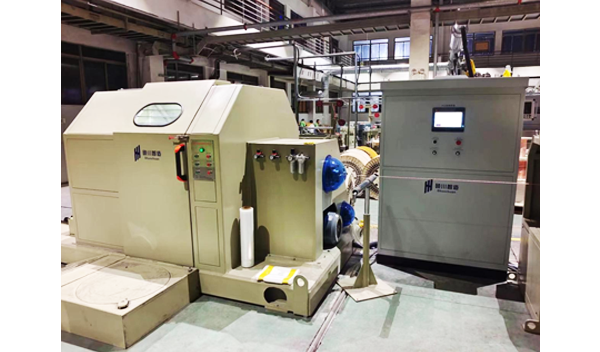
That is exactly where our 630 Cantilever Stranding Machine for Cable Production comes in. At Wuxi Shuochuan Electromechanical Equipment Manufacturing Co., Ltd., we develop and manufacture wire and cable production equipment with a practical focus. Our goal is not to make equipment look complicated. Our goal is to make it work reliably in a real factory.
The 630 Cantilever Stranding Machine is designed for wire and cable manufacturers that need stable conductor stranding for different cable structures. Depending on the production plan, it can be used together with suitable pay-off, tension control, take-up, and other Auxiliary Equipment.
In our experience, cable production becomes much easier when the machine configuration matches the actual product. Conductor material, wire structure, required lay, reel size, production speed, workshop layout, and downstream processes all matter. So when we discuss a 630 Cantilever Stranding Machine with a customer, we prefer to understand the complete Production Process instead of looking at the machine as an isolated piece of equipment.
1. What Is a 630 Cantilever Stranding Machine?
A 630 Cantilever Stranding Machine is a type of Cable Manufacturing Machine used to strand multiple individual wires or conductors into a combined conductor or cable component. The number “630” is commonly used in this type of equipment to identify the reel or machine size class, but the actual working range and configuration depend on the specific machine design and customer requirements.
The word “cantilever” describes the mechanical arrangement of the stranding system. Instead of using a traditional large cage structure, a cantilever-type arrangement supports the rotating components in a more compact machine layout. This can make the equipment easier to arrange in a production workshop and can provide a practical solution for specific cable production applications.
However, I would not recommend choosing a stranding machine simply because the name contains “630.” The important question is whether the equipment matches the cable you actually manufacture.
For example, one customer may mainly produce electrical power cables, while another may manufacture automotive wires or photovoltaic cables. These products can have very different conductor structures. The machine configuration, tension control, pay-off arrangement, take-up system, and operating conditions may therefore need to be different.
Our 630 Cantilever Stranding Machine for Cable Production is designed with this practical idea in mind. We focus on stable wire handling, controlled stranding, reasonable machine layout, and compatibility with the customer's overall Production Line.
Typical Applications
Power cable production
Electrical wire manufacturing
Automotive Wire Production
Photovoltaic cable production
Communication cable applications
Industrial cable manufacturing
Charging pile cable production
Other stranded conductor applications
The exact application depends on the conductor material, cable structure, required production performance, and final product specification.
2. How Does the 630 Cantilever Stranding Machine Work?
The working principle is easier to understand than it may sound.
Several individual wires are supplied from pay-off units. These wires are guided toward the stranding section, where they are brought together and twisted according to the required cable structure. At the same time, the machine needs to control wire tension and movement. After stranding, the finished conductor is collected by the take-up system.
In a normal production process, I would look at the system as several connected stages rather than a single machine:
Wire or conductor pay-off
Wire guiding and alignment
Tension control
Rotating stranding process
Lay formation
Finished conductor guidance
Take-up and winding
Every stage has a job. If the pay-off is unstable, the stranding section may receive uneven tension. If tension changes too much, the finished conductor may not have a consistent appearance. If the take-up system does not match the production conditions, the finished product may not be wound neatly.
That is why we pay attention to the complete line configuration when designing a 630 Cantilever Stranding Machine.
The basic principle can be described simply: individual wires enter the machine, the stranding mechanism combines them into the required structure, and the finished conductor is continuously collected. The actual mechanical and electrical configuration is adjusted according to the customer's product.
Typical Production Flow
Individual wires → Pay-off → Wire guiding → Tension control → Cantilever stranding → Finished conductor guiding → Take-up
For a factory operator, this process should be easy to understand and practical to operate. Good equipment should not force the operator to spend unnecessary time fighting the machine.
For this reason, we also consider access to operating points, adjustment requirements, machine maintenance, and the connection between the stranding machine and other cable production equipment during the design stage.
3. Main Features of Our 630 Cantilever Stranding Machine
There are many stranding machines available in the cable manufacturing market. From our perspective, the important thing is not how many features can be listed on a brochure. What matters is whether those features solve actual production problems.
Stable Stranding Performance
Stable operation is one of the first things we consider. The machine needs to keep the conductor path organized during continuous production. This helps maintain a consistent stranding process and reduces unnecessary manual intervention.
Practical Cantilever Structure
The cantilever arrangement provides a different mechanical solution compared with traditional cage-type equipment. It can be suitable for production environments where a relatively practical machine arrangement is required.
Flexible Production Configuration
Different cable products require different configurations. We can discuss the pay-off, tension control, take-up, reel requirements, and auxiliary equipment according to the customer's actual production plan.
Suitable for Continuous Production
Cable factories usually care about continuity. Frequent stopping and adjustment can reduce Production Efficiency. A properly configured industrial Cable Stranding Machine should support stable operation during the planned production cycle.
Easy-to-Understand Operation
Industrial equipment does not need to be mysterious. Operators should be able to understand the basic operating logic, monitor important conditions, and perform routine adjustments according to the machine instructions.
Adaptable to Different Cable Products
Our stranding equipment can be configured for different wire and cable manufacturing applications. The actual suitability depends on conductor structure, material, cable design, and technical requirements, so we confirm these details before finalizing the machine.
4. Technical Advantages: What Really Matters in Production?
When customers ask me about the technical advantages of a 630 Cantilever Stranding Machine for Cable Production, I usually avoid saying that one machine is automatically better than another. A better question is: “Better for what product?”
A machine used for one cable structure may not be the right machine for another. In cable manufacturing, the relationship between conductor structure and production equipment is important.
For example, conductor resistance, wire size, conductor material, number of wires, required lay, flexibility, finished cable diaMeter, and winding requirements can all influence the production setup.
IEC 60228:2023 covers conductors used in electric power cables and cords and includes requirements related to conductor cross-sectional areas, wire numbers and sizes, and resistance values. It covers solid, stranded, and Milliken conductors made from copper, aluminium, and aluminium alloy for applicable cable types.
| Production Consideration | Why It Matters | Typical Equipment Response |
|---|---|---|
| Conductor material | Copper, aluminium and aluminium alloy can behave differently during handling and stranding. | Confirm suitable wire handling, tension and guiding configuration. |
| Conductor structure | Different numbers and arrangements of wires require different production conditions. | Adjust stranding configuration according to the cable design. |
| Lay requirement | The lay affects the final conductor structure and appearance. | Set the machine according to the required production specification. |
| Take-up requirement | Finished conductor needs to be collected smoothly and neatly. | Match the take-up system and reel arrangement to the product. |
| Production continuity | Frequent interruptions increase production time and operator workload. | Use suitable tension control and auxiliary systems for continuous operation. |
Source: IEC 60228:2023, Conductors of insulated cables, International Electrotechnical Commission. The table above is a practical production interpretation, not a reproduction of the standard.
Another important issue is machine safety. ISO 12100:2010 provides general principles for machinery design, risk assessment, and risk reduction. It explains that hazards should be identified and evaluated during relevant stages of a machine's life cycle, with suitable measures used to reduce risks.
For electrical equipment, IEC 60204-1 addresses electrical, electronic, and programmable electronic equipment and systems used with machines. The standard includes areas such as protective bonding, overcurrent protection, emergency stop functions, control circuit protection, and technical documentation.
| Reference | Main Area | Relevance to Cable Machinery |
|---|---|---|
| ISO 12100:2010 | Machinery safety and risk reduction | Useful reference for identifying machinery hazards and reducing risks during machine design. |
| IEC 60204-1:2016+A1:2021 | Electrical equipment of machines | Provides requirements and guidance for electrical equipment and machine control systems. |
| IEC 60228:2023 | Conductors of insulated cables | Provides conductor-related specifications for applicable electric power cables and cords. |
Source: Official ISO and IEC publications. Applicable standards for a specific machine or cable product should always be confirmed according to the final design, destination market, and applicable regulations.
These standards do not mean that a machine should simply carry a list of standards on its product page. In real manufacturing, the more important point is to use relevant requirements as references during design, production, inspection, and documentation.
5. Where Can a 630 Cantilever Stranding Machine Be Used?
Our 630 Cantilever Stranding Machine is mainly intended for wire and cable manufacturing applications. Because the final machine configuration can vary, I prefer to discuss applications based on actual cable products.
Power Cable Manufacturing
Power cable manufacturers need reliable conductor production before insulation, sheathing, or other downstream processes. A stable stranding process helps prepare the conductor structure for later cable manufacturing stages.
For this application, the customer may need to consider conductor material, wire arrangement, cable construction, reel requirements, and production capacity. We use these details to determine the suitable equipment configuration.
Electrical Wire Production
Electrical wires can have different conductor structures depending on their use. The stranding machine needs to provide suitable wire handling and stable twisting conditions for the planned product.
Photovoltaic Cable Production
Photovoltaic cables are used in solar power systems and need to meet the requirements of their intended application. When producing the conductor component, stable wire handling is important because the cable must continue through several later manufacturing processes.
Automotive Wire Manufacturing
Automotive wire production can involve small and flexible conductors with specific construction requirements. The equipment configuration should therefore be selected according to the actual wire structure rather than simply choosing a machine based on its name.
Charging Pile Cable Production
Charging cables are another growing cable application. Their conductor construction and flexibility requirements can differ from conventional power cables. For this reason, the stranding process needs to be considered together with the downstream cable structure.
Communication and Industrial Cables
Communication and industrial cable applications can have different requirements from standard power cables. Before supplying equipment, we recommend confirming the product construction and the production process in detail.
6. How We Manufacture and Test the Machine
At Wuxi Shuochuan Electromechanical Equipment Manufacturing Co., Ltd., we integrate research and development, manufacturing, and sales. We have obtained more than ten utility model patent certificates and have developed a range of automated equipment for wire and cable production.
Our production philosophy is straightforward: build the machine according to the agreed technical requirements, check the important parts during assembly, test the complete equipment before shipment, and communicate clearly with the customer.
We do not believe that manufacturing ends when the machine is mechanically assembled. A machine may look complete while still requiring electrical checks, control testing, mechanical inspection, and trial operation.
Our General Manufacturing Process
Technical discussion: We confirm cable structure, conductor information, production requirements, reel requirements, workshop conditions, and other important details.
Configuration confirmation: The machine arrangement and auxiliary equipment are discussed according to the customer's production needs.
Component preparation: Main mechanical and electrical components are prepared according to the agreed design.
Mechanical assembly: The machine structure and rotating components are assembled and checked.
Electrical installation: Electrical components, control systems, wiring, and related equipment are installed.
Inspection: Key mechanical and electrical points are checked before testing.
Trial operation: The machine is operated and tested according to the agreed technical requirements.
Final preparation: After inspection and testing, the machine is prepared for packaging and shipment.
This process is especially important for an automatic cable stranding machine because the mechanical system and electrical control system have to work together.
Production and Delivery Schedule
For our Stranding Machine Series, the typical production and delivery cycle is generally around 30–90 days after the technical specifications and order details have been confirmed. The actual schedule depends on the machine model, configuration, customization requirements, production workload, and project complexity.
| Project Stage | Typical Situation | Main Customer Confirmation |
|---|---|---|
| Technical discussion | Product and production requirements are reviewed. | Cable structure, conductor details, production needs |
| Configuration | Machine and auxiliary equipment are determined. | Machine layout, pay-off, tension and take-up requirements |
| Manufacturing | Mechanical and electrical assembly is completed. | Agreed technical specifications |
| Testing | Machine operation and important functions are checked. | Test requirements and acceptance conditions |
| Delivery | Equipment is protected and prepared for transportation. | Shipping destination and delivery arrangement |
Source: Wuxi Shuochuan Electromechanical Equipment Manufacturing Co., Ltd. project information supplied for this product page. Actual production time varies by model, configuration, customization, and order conditions.
7. Payment, Packaging, Transportation and After-Sales Support
Buying cable machinery is not only about the equipment itself. International customers also need to think about payment, packaging, transportation, installation, and communication after the machine leaves the factory.
Payment Terms
Payment terms can be arranged according to the contract. A common arrangement is a deposit followed by the balance before shipment, although other mutually agreed payment arrangements can also be discussed depending on the project.
For customized machinery, we recommend confirming the payment schedule together with the technical specification and delivery schedule. This keeps the commercial and technical sides of the project clear from the beginning.
Packaging
Large cable machines contain many mechanical and electrical components, so packaging needs to consider more than appearance. Major components should be protected from moisture, dust, impact, and unwanted movement during transportation.
Depending on the machine structure and shipping conditions, we may use steel frames, wooden cases, protective films, and other suitable packaging materials.
Before shipment, we also pay attention to exposed parts, electrical cabinets, small accessories, spare components, and other items that could be affected during long-distance transportation.
Transportation
Depending on the destination and project requirements, the equipment can be shipped by sea, rail, or other suitable transportation methods. Machine dimensions, weight, shipping route, destination, and delivery schedule all need to be considered.
For international cable manufacturers, we recommend confirming the delivery address and shipping conditions early in the project. It helps us plan the packaging and transportation arrangement more effectively.
8. Why Choose Wuxi Shuochuan for a 630 Cantilever Stranding Machine?
There are many cable machinery suppliers in the market, so I understand why customers ask this question.
For us, the answer is not simply “because our machine is good.” A serious equipment supplier should be able to explain what the machine is designed to do, what information is needed before manufacturing, how the equipment is tested, and what the customer can realistically expect.
Wuxi Shuochuan Electromechanical Equipment Manufacturing Co., Ltd. is an innovative technology enterprise integrating R&D, manufacturing, and sales. We have obtained more than ten utility model patent certificates and have developed equipment for different wire and cable production applications.
Our product range includes high-speed extruders, three-in-one BV extrusion automatic production lines, three-in-one plus one BVVB automated production lines, photovoltaic wire and Cable Production Lines, automotive Wire Production Lines, electronic wire production lines, network communication wire production lines, cable production lines, charging pile cable production lines, take-up and unwinding equipment, auxiliary equipment, and related raw materials.
This wider product range is useful when customers are planning a complete production process. We can look at the stranding process together with other equipment instead of treating it as a completely separate operation.
Our company follows the working spirit of “Quality First, Continuous Improvement, and Honest Service.” We also aim to create practical equipment that improves production efficiency while remaining understandable and manageable for operators.
Our stated goal is “Creating first-class products and ensuring customer satisfaction.” In practical terms, this means paying attention to technical communication, manufacturing quality, testing, delivery, and customer requirements throughout the project.
What We Ask Before Recommending a Machine
If a customer asks me for a quotation for a 630 Cantilever Stranding Machine for Cable Production, I normally want to know more than the product name.
What type of cable will you produce?
What conductor material will be used?
What is the conductor structure?
How many individual wires need to be stranded?
What production capacity is expected?
What reel or take-up arrangement is required?
What is the available workshop space?
Does the machine need to connect with existing equipment?
What power supply and electrical requirements apply at the installation site?
What is the destination country and shipping condition?
These questions may seem basic, but they can prevent expensive mistakes later. A stranding machine is part of a production system, and the system needs to make sense as a whole.
9. Frequently Asked Questions About the 630 Cantilever Stranding Machine
Q1: What is a 630 Cantilever Stranding Machine used for?
The machine is used for stranding multiple wires or conductors into a combined conductor structure. It can be applied to power cables, electrical wires, photovoltaic cables, automotive wires, charging cables, and other suitable cable manufacturing applications.
Q2: Why is it called a 630 Cantilever Stranding Machine?
“630” is generally used to identify the machine or reel size class, while “cantilever” describes the machine's structural arrangement. However, the exact working specifications should be confirmed with the manufacturer according to the final machine design.
Q3: Can the machine produce different types of cables?
It can be configured for different wire and cable applications, but not every configuration is suitable for every cable. The conductor material, wire size, number of wires, cable structure, production requirements, and take-up conditions should be reviewed before the machine is finalized.
Q4: Can you customize the 630 Cantilever Stranding Machine?
Yes. We can discuss machine configuration and auxiliary equipment according to the customer's cable structure, production requirements, workshop layout, reel requirements, and other technical conditions.
Q5: What auxiliary equipment may be used with the machine?
Depending on the production process, suitable pay-off equipment, tension control systems, take-up systems, wire guiding equipment, and other auxiliary equipment may be included or connected with the stranding line.
Q6: How long does production take?
For the Stranding Machine Series, the typical production and delivery cycle is generally 30–90 days after technical specifications and order details are confirmed. The actual schedule depends on the machine configuration, customization requirements, production workload, and project conditions.
Q7: How do you test the machine before shipment?
Before delivery, we assemble, inspect, test, and check the machine according to the agreed technical requirements. The purpose is to confirm that the equipment is properly prepared for shipment and subsequent installation.
Q8: How is the machine packaged for international transportation?
Major components are protected against moisture, dust, impact, and movement. Depending on the machine structure and shipping conditions, we may use steel frames, wooden cases, protective films, and other suitable materials.
Q9: Can you arrange international transportation?
Transportation can be arranged according to the destination, machine dimensions, and delivery requirements. Sea freight, rail transportation, and other suitable methods may be considered.
Q10: What information should I provide for a quotation?
The most useful information includes the cable type, conductor material, conductor structure, number of wires, required production capacity, reel information, workshop conditions, and any special production requirements. The more complete the information, the easier it is for us to recommend a suitable configuration.
10. Final Thoughts: Choosing the Right Stranding Machine for Your Production
A 630 Cantilever Stranding Machine for Cable Production is not simply a piece of equipment that twists wires together. It is one part of a complete cable manufacturing process, and its performance depends on how well the machine configuration matches the actual product.
From our point of view, stable conductor handling, suitable tension control, practical machine structure, reliable take-up, clear operation, and proper testing are more important than simply filling a product page with technical words.
At Wuxi Shuochuan, we approach each project from the production side. We want to understand what cable you are making, how you want to make it, what equipment you already have, and what production problems you are trying to solve.
Our 630 Cantilever Stranding Machine can be used as part of wire and cable production lines for power cables, electrical wires, photovoltaic cables, automotive wires, charging cables, and other suitable applications. The final configuration can be discussed according to conductor structure, production requirements, workshop layout, reel requirements, and related equipment.
If you are comparing different 630 Cantilever Stranding Machine manufacturers, I recommend comparing more than the purchase price. Look at the technical communication before the order, the clarity of the machine configuration, the inspection and testing process, delivery arrangements, packaging, and the supplier's ability to understand your actual cable production process.
That is how we approach cable machinery at Shuochuan. We believe good equipment starts with understanding the customer's product and ends with a machine that can do its job steadily on the factory floor.



 WhatsApp
 телефон