


 English
 中文
中文


When I introduce a cable forming machine to a customer, I usually avoid starting with a long list of technical terms. I prefer to begin with the actual production problem: how do you bring several conductors together, keep the process stable, and form the cable structure you need without making the Production Line unnecessarily complicated?
That is the practical reason behind our SC-Φ800 Cantilever Stranding (Cable Forming) Machine. At Wuxi Shuochuan Electromechanical Equipment Manufacturing Co., Ltd., we design and manufacture wire and Cable Production equipment with a strong focus on real factory use. We understand that a machine is useful only when it can fit into the customer's Production Process and operate reliably day after day.
The SC-Φ800 Cantilever Stranding (Cable Forming) Machine is designed for wire and cable stranding and forming applications. It brings individual conductors together and forms them into the required cable structure through a controlled production process. Depending on the final cable design, the machine can work with suitable pay-off, guiding, tension control, take-up, and other Auxiliary Equipment.
What I like about this type of equipment is its practical approach. Instead of looking at stranding and cable forming as two completely separate ideas, we can consider them as connected steps in one production process. The goal is to make conductor handling, stranding, forming, and take-up work together smoothly.
Of course, one machine cannot automatically suit every cable. Cable structure, conductor material, wire arrangement, production requirements, reel conditions, workshop layout, and downstream processes all need to be considered. That is why we normally confirm the customer's technical requirements before finalizing the machine configuration.
1. What Is the SC-Φ800 Cantilever Stranding (Cable Forming) Machine?
The SC-Φ800 Cantilever Stranding (Cable Forming) Machine is a Cable Manufacturing Machine designed to combine and strand individual conductors while forming them into a controlled cable structure.
In simple terms, imagine several separate wires that need to become one organized cable component. The machine guides these wires into the production path, controls their movement, brings them together, and performs the required stranding or forming operation. The finished product is then guided toward the take-up section for winding.
The word “cantilever” refers to the mechanical arrangement used by the machine. The structure is different from a traditional cage-type Stranding Machine. For certain cable production applications, this arrangement provides a practical way to organize the rotating and guiding parts of the equipment.
The “Φ800” designation identifies the machine size or design class used for this equipment. However, I always recommend that customers treat the product name as the starting point rather than the complete technical specification. The exact working conditions and production capability should be confirmed according to the actual machine configuration.
This is especially important when customers search for terms such as SC-Φ800 Cantilever Stranding Machine, Φ800 cable forming machine, or cantilever cable stranding equipment. Search keywords are useful for finding the right type of machine, but the final selection should always be based on the cable product.
What Can the Machine Help With?
Conductor stranding
Cable forming
Wire and conductor combining
Continuous cable production
Organized conductor handling
Stable cable structure formation
Integration with pay-off and take-up systems
The exact application depends on the cable structure and agreed production requirements.
2. How Does the Cantilever Stranding and Cable Forming Process Work?
The working principle is actually quite straightforward once we remove the complicated language.
Individual conductors are supplied from the pay-off side. Each conductor follows a controlled path toward the stranding section. The machine then brings the conductors together and applies the required twisting or forming movement. During this process, the wires need to remain properly guided and their tension needs to be controlled.
After the conductors are formed into the required structure, the finished cable component moves toward the take-up system. The take-up collects the product onto a reel in an organized way.
So, the basic production path can be understood like this:
Pay-off → Wire guiding → Tension control → Cantilever stranding → Cable forming → Finished cable guiding → Take-up
Every part of this process affects the final result.
If the incoming wires are not supplied smoothly, the stranding section may experience unstable tension. If the guiding arrangement is not suitable, the conductor path may become inconsistent. If the take-up system does not match the production conditions, the finished cable may not be wound properly.
This is why we do not look at the SC-Φ800 machine as just a rotating mechanical unit. We consider the whole production route.
Stranding and Forming Are Connected
There is sometimes confusion between “stranding” and “cable forming.” In practical cable production, these operations can be closely related.
Stranding generally means combining individual wires or conductors through a controlled twisting arrangement. Cable forming focuses more broadly on creating the desired overall cable structure from its components.
For some products, the stranding operation is the key process. For others, the forming stage and the relationship between several cable components are equally important.
When we discuss a cantilever stranding cable forming machine with a customer, we therefore ask about the complete cable construction rather than assuming that every product follows exactly the same process.
3. Main Features of the SC-Φ800 Cable Forming Machine
In my experience, the best equipment descriptions are not the ones with the longest feature list. They are the ones that explain how a machine helps the operator and production manager solve everyday problems.
Cantilever Machine Structure
The cantilever design provides a practical mechanical arrangement for cable stranding and forming. Compared with a traditional cage-type structure, the machine has a different way of organizing the rotating components and conductor path.
This can be useful for manufacturers looking for a dedicated cable forming solution with a practical workshop arrangement.
Stable Conductor Handling
Conductor handling is one of the most important parts of any stranding process. Individual wires must move through the machine in an organized way.
Our design approach focuses on maintaining a controlled conductor path so that the stranding process can run smoothly under the agreed production conditions.
Suitable for Continuous Production
Cable factories rarely want equipment that requires constant stopping and manual correction. Continuous operation is normally much more useful.
The SC-Φ800 can be configured for continuous production according to the cable structure and production requirements. Proper pay-off, tension control, and take-up equipment are important parts of achieving this goal.
Flexible Configuration
We understand that cable manufacturers do not all make the same products. The machine configuration can therefore be discussed according to the customer's conductor structure, cable design, production requirements, workshop space, reel requirements, and related equipment.
Practical Operation
Industrial machinery should be understandable to the people who operate it. Operators need to know how the production process works, what conditions need attention, and how routine adjustments should be performed.
We therefore pay attention not only to the mechanical structure but also to the relationship between the control system, operating interface, production process, and machine maintenance.
Integration with Cable Production Lines
The SC-Φ800 does not necessarily have to work alone. Depending on the customer's production process, it can be considered together with other wire and cable manufacturing equipment.
This is particularly useful for manufacturers that are building a complete cable production line rather than purchasing a single standalone machine.
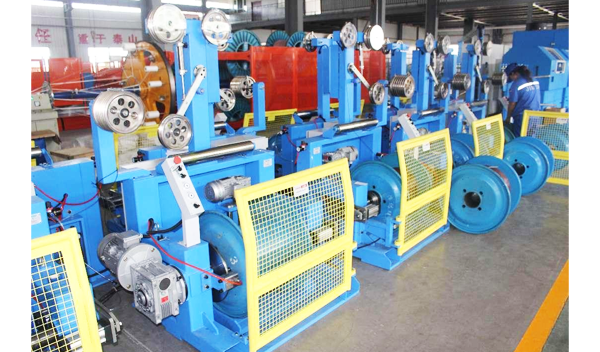
4. Technical Advantages and Production Considerations
When selecting a SC-Φ800 Cantilever Stranding (Cable Forming) Machine, I recommend paying attention to several practical factors.
The first is the cable structure. A cable may contain several conductors, fillers, insulation layers, screens, or other components. The stranding machine mainly deals with the relevant conductor or cable-forming stage, so we need to understand what enters the machine and what needs to come out.
The second is conductor material. Copper, aluminium, and aluminium alloy conductors can have different handling characteristics. IEC 60228:2023 covers applicable conductors used in electric power cables and cords and includes requirements related to conductor sizes, wire numbers and sizes, and resistance values.
| Production Factor | Why We Check It | Possible Equipment Consideration |
|---|---|---|
| Conductor material | Different materials can require different handling conditions. | Suitable guiding and tension arrangement |
| Wire arrangement | The number and position of individual wires affect the forming process. | Suitable pay-off and conductor path |
| Cable structure | The final structure determines the required forming process. | Machine configuration matched to product design |
| Production continuity | Unplanned stops can increase labor and production time. | Stable tension and suitable auxiliary equipment |
| Finished reel | The finished product must be collected neatly. | Suitable take-up and reel arrangement |
Source: Practical production considerations based on the cable manufacturing process and IEC 60228:2023. The table is not a reproduction of the standard.
Tension Control Matters More Than It Looks
If I had to choose one area that new buyers sometimes underestimate, it would be tension control.
Imagine pulling several strings together. If one string is pulled much harder than the others, the final arrangement will not behave the same way. Cable conductors are obviously more complicated than strings, but the basic idea is similar.
During stranding, the wires need to move at controlled conditions. Excessive variation can affect the appearance and consistency of the finished product.
That is why we consider pay-off, guiding, tension control, stranding, and take-up as one connected system.
Machine Safety and Electrical Design
Safety also needs to be considered from the beginning of machine design. ISO 12100 provides general principles for machinery safety, including risk assessment and risk reduction.
For the electrical side of machinery, IEC 60204-1 addresses electrical, electronic, and programmable electronic equipment and systems used with machines. Its scope includes areas such as protective bonding, overcurrent protection, emergency stop functions, control circuit protection, and technical documentation.
| Reference | Focus | Practical Meaning for Machine Projects |
|---|---|---|
| ISO 12100:2010 | Machinery safety | Provides principles for hazard identification, risk assessment, and risk reduction. |
| IEC 60204-1 | Electrical equipment of machines | Addresses electrical equipment and related safety and control requirements. |
| IEC 60228:2023 | Electric cable conductors | Provides conductor-related requirements for applicable power cable applications. |
Sources: International Organization for Standardization and International Electrotechnical Commission official publications. Specific standards and regulatory requirements should be confirmed for the final machine, cable product, and destination market.
I mention these standards for a simple reason: industrial equipment should be designed and manufactured with safety and applicable technical requirements in mind. Standards are not just words for a brochure.
5. Applications in Wire and Cable Manufacturing
One of the useful things about the SC-Φ800 Cantilever Stranding Machine is that its application is not limited to one narrow cable category. The actual suitability depends on the final machine configuration and product requirements.
Power Cable Production
Power cables often require stranded conductors as part of their construction. The conductor must be prepared correctly before later processes such as insulation and cable assembly.
For these applications, we pay attention to conductor material, wire arrangement, cable structure, required production conditions, and take-up requirements.
Electrical Wire Manufacturing
Electrical wires can use different conductor structures depending on their intended use. A suitable Wire Stranding Machine needs to handle the incoming wires smoothly while maintaining the required forming conditions.
Photovoltaic Cable Production
Solar power systems use dedicated photovoltaic cables, and their manufacturing process involves several controlled stages. Our stranding equipment can be considered for the conductor-related production stage where the cable structure is suitable.
Automotive Wire Production
Automotive wires can have relatively flexible conductor structures and specific production requirements. The equipment selection needs to be based on the actual product rather than simply using a general-purpose machine.
Charging Cable Manufacturing
Charging pile cables are another important application area. Depending on the cable design, manufacturers may need a stable process for preparing and forming the conductor structure.
Communication and Industrial Cables
Communication cables and industrial cables can have very different construction methods. Some applications may require specialized production equipment, while others may be suitable for a configured stranding and forming machine.
For this reason, we always recommend discussing the actual cable drawing or product specification before confirming machine suitability.
6. From Technical Discussion to Machine Delivery
One thing I have learned from industrial equipment projects is that problems often start before manufacturing begins.
If the cable structure is not clearly understood, the machine configuration may be wrong. If the reel information is missing, the take-up arrangement may need to be changed later. If the workshop space is not considered, installation can become unnecessarily difficult.
So we try to make the technical discussion clear at the beginning.
Step 1: Understand the Cable
We first want to know what product the customer is making. The cable type, conductor material, wire arrangement, structure, production requirements, and other relevant details help us understand the application.
Step 2: Confirm the Production Process
Next, we look at what happens before and after stranding. This tells us what pay-off and take-up arrangements may be required and whether the machine needs to connect with existing equipment.
Step 3: Confirm Machine Configuration
Once the production requirements are clear, the machine configuration can be discussed. This is where details such as conductor guiding, tension control, auxiliary equipment, reel requirements, and workshop layout become important.
Step 4: Manufacturing and Assembly
After the technical and commercial details are confirmed, the equipment enters manufacturing and assembly. Mechanical parts, electrical components, control systems, and auxiliary units are assembled according to the agreed design.
Step 5: Inspection and Testing
Before shipment, the machine is assembled, inspected, tested, and checked according to the agreed technical requirements.
For us, this is an important stage. A machine should not simply be packed because the mechanical assembly is finished. We need to check its operation and prepare the equipment properly for delivery.
Step 6: Packaging and Shipment
After testing, the equipment is prepared for transportation. Major components are protected against moisture, dust, impact, and movement.
Depending on the machine structure and shipping conditions, we may use steel frames, wooden cases, protective films, and other suitable packaging materials.
| Project Stage | Our Main Work | Customer's Main Concern |
|---|---|---|
| Technical discussion | Understand product and production requirements | Correct machine selection |
| Configuration | Determine machine and auxiliary systems | Compatibility with production line |
| Manufacturing | Mechanical and electrical assembly | Build according to agreed specifications |
| Testing | Inspection and trial operation | Machine readiness before shipment |
| Packaging | Protect major components | Safe long-distance transportation |
Source: Wuxi Shuochuan Electromechanical Equipment Manufacturing Co., Ltd. product and project information supplied for this page. Actual procedures may vary according to machine configuration and contract requirements.
Production and Delivery Time
For our Stranding Machine Series, the typical production and delivery cycle is generally 30–90 days after the technical specifications and order details have been confirmed.
This is a general project range, not a fixed promise for every machine. The actual schedule can change according to machine model, customization requirements, production workload, component availability, testing requirements, and shipping arrangements.
7. Why Work With Wuxi Shuochuan?
When a customer is searching for a 630 Cantilever Stranding Machine manufacturer, price is naturally important. But from my perspective, price should not be the only comparison point.
A cable production machine is a long-term production asset. The more useful questions are: Does the supplier understand the cable? Can the supplier communicate clearly? Is the equipment configuration reasonable? Is the machine tested before delivery? Are packaging and transportation considered? Can the supplier support the project from technical discussion to final shipment?
Wuxi Shuochuan Electromechanical Equipment Manufacturing Co., Ltd. integrates R&D, manufacturing, and sales. We have obtained more than ten utility model patent certificates and have developed automated equipment for different wire and cable production applications.
Our product portfolio includes high-speed extruders, three-in-one BV extrusion automatic production lines, three-in-one plus one BVVB automated production lines, photovoltaic wire and cable production lines, automotive Wire Production Lines, electronic wire production lines, network communication wire production lines, cable production lines, charging pile cable production lines, take-up and unwinding equipment, auxiliary equipment, and related raw materials.
This broader product experience gives us a useful perspective when discussing a stranding machine. We can consider how the machine fits into the customer's overall cable production process.
Our Approach to Machine Projects
We follow the working principle of “Quality First, Continuous Improvement, and Honest Service.”
For us, “quality” does not only mean that the machine looks good after assembly. It also means that the machine should be built according to the agreed technical requirements and properly checked before delivery.
“Continuous improvement” means we pay attention to practical production problems and keep improving equipment design and manufacturing methods.
“Honest service” means we prefer to tell customers what the machine can do and what information we need before making a recommendation. If a product requires a different configuration, it is better to discuss that early than to make an unrealistic promise.
Our goal is to create practical equipment and help customers achieve stable production.
What Makes Our Service Practical?
R&D, manufacturing, and sales are integrated within the company.
More than ten utility model patent certificates have been obtained.
We manufacture equipment for different wire and cable applications.
Machine configuration is discussed according to actual production requirements.
Equipment is assembled, inspected, and tested before shipment.
International transportation and packaging requirements can be discussed.
Payment arrangements can be specified in the contract according to the project.
8. FAQ About the SC-Φ800 Cantilever Stranding (Cable Forming) Machine
Q1: What is the SC-Φ800 Cantilever Stranding (Cable Forming) Machine used for?
It is designed for wire and cable stranding and forming applications. It can be considered for power cables, electrical wires, photovoltaic cables, automotive wires, communication cables, charging cables, and other suitable cable manufacturing applications.
Q2: What does “Φ800” mean?
Φ800 is part of the machine designation and identifies the relevant machine size or design class. The exact technical capability should be confirmed from the final machine specification rather than inferred only from the product name.
Q3: Is this machine suitable for all types of cables?
No single stranding machine should be assumed to suit every cable. We recommend confirming the conductor material, wire structure, number of conductors, cable construction, production requirements, reel requirements, and other relevant information before selecting the final configuration.
Q4: What is the difference between a cantilever strander and a Cage Strander?
The main difference is the mechanical arrangement of the stranding system. A cantilever machine uses a different structural layout from a traditional cage-type strander. The better choice depends on the cable product, production requirements, machine configuration, and factory layout.
Q5: Can the SC-Φ800 machine be customized?
Machine configuration can be discussed according to the customer's cable structure, conductor material, production requirements, workshop conditions, reel requirements, and integration needs. The final configuration should be confirmed during the technical discussion.
Q6: Does the machine include pay-off and take-up equipment?
The complete configuration depends on the project. Suitable pay-off, tension control, take-up, and other auxiliary systems can be considered according to the customer's production process and requirements.
Q7: How long is the production cycle?
For the Stranding Machine Series, the typical production and delivery cycle is generally 30–90 days after technical specifications and order details are confirmed. The actual schedule depends on the specific machine, configuration, customization, production conditions, and project requirements.
Q8: How do you prepare the machine before shipment?
Before delivery, the machine is assembled, inspected, tested, and checked according to the agreed technical requirements. Major components are then prepared for transportation with suitable protection against moisture, dust, impact, and movement.
Q9: How can the machine be transported?
Depending on the destination, machine dimensions, shipping route, and delivery requirements, transportation can be arranged by sea, rail, or other suitable methods.
Q10: What information should I provide when asking for a quotation?
I recommend providing the cable type, conductor material, conductor structure, number of wires, required production capacity, reel information, workshop conditions, and any special production requirements. A cable drawing or technical specification is also useful when available.
Q11: Can this machine be integrated into an existing cable production line?
It can be considered for integration with existing equipment, but compatibility should be reviewed before the project is finalized. We need to understand the upstream pay-off system, downstream equipment, cable structure, production speed requirements, available space, and control requirements.
Q12: What payment terms are available?
Payment terms can be arranged according to the contract. A common arrangement includes a deposit followed by the balance before shipment, while other mutually agreed arrangements can also be discussed depending on the project.
Conclusion
The SC-Φ800 Cantilever Stranding (Cable Forming) Machine is designed around a simple production need: bringing individual conductors together in a controlled and repeatable way while forming the required cable structure.
From our perspective, the value of a Cable Stranding Machine is not determined by its name alone. The real value comes from how well the equipment matches the product being manufactured.
That means looking at the conductor material, cable structure, wire arrangement, tension requirements, pay-off system, stranding process, take-up system, workshop layout, and downstream production equipment as one complete picture.
At Wuxi Shuochuan, we take the same approach when working on a SC-Φ800 Cantilever Stranding Machine project. We start by understanding the customer's cable and production process. We then discuss the suitable machine configuration, manufacture the equipment according to the agreed requirements, inspect and test it before delivery, and prepare it for international transportation when required.
For manufacturers searching for a SC-Φ800 Cantilever Stranding Machine for cable production, a Φ800 cable forming machine, or cantilever stranding equipment for wire and cable manufacturing, we believe a practical technical discussion is the right place to start.
Tell us what cable you are producing, what conductor structure you need, and what your production process looks like. From there, we can discuss the machine configuration based on your actual requirements rather than simply matching a product name.



 WhatsApp
 телефон